 Save
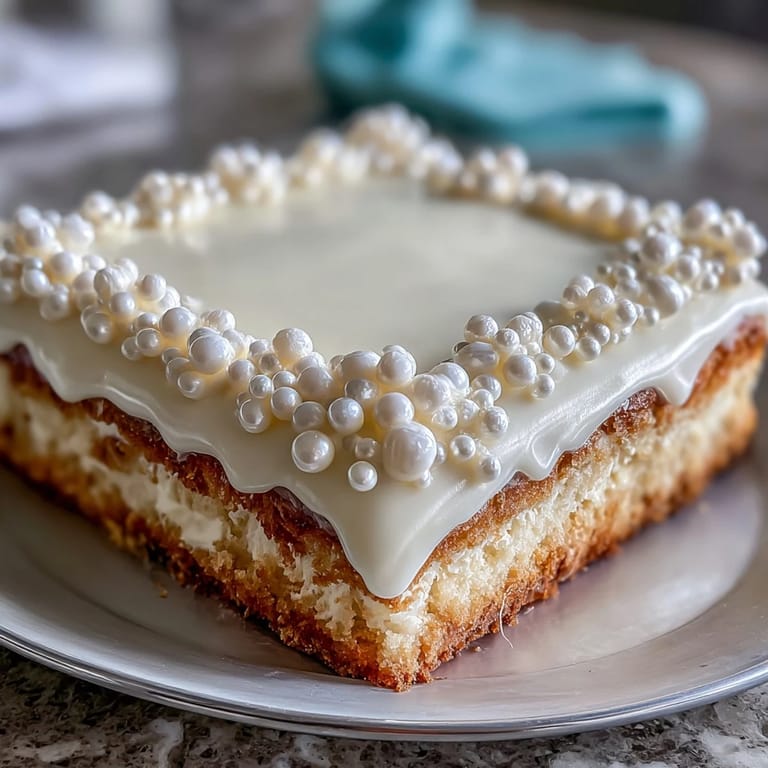
Save There's something about baking a cake for a milestone that makes your hands shake a little. Years ago, I was asked to create the dessert for my godson's First Communion, and I remember standing in the kitchen at dawn, flour dust catching the early light, thinking about how this simple act of baking felt sacred somehow. The cake needed to be elegant but approachable, special but not intimidating to serve to a crowd of seventy people. That's when I discovered that a generous sheet cake with pearl fondant struck the perfect balance—it looked like it belonged in a fancy bakery, yet it fed a room full of happy guests without fuss.
When the cake was finished that Communion morning, with its soft pearl shimmer catching the light in the church hall, I watched my godson's mother tear up a little. She hadn't expected something so beautiful sitting there on the dessert table. That's when I understood—a celebration cake isn't just about the flavor, though that matters. It's about showing up for people you care about with something made by your own hands, something that says, I believed this moment deserved care.
Ingredients
- All-purpose flour (3 cups): This is your cake's backbone, giving it structure without being heavy or dense.
- Granulated sugar (2 cups): Creamed together with butter, it aerates the batter and keeps the cake tender and moist.
- Unsalted butter (1 cup, plus 1 cup more for buttercream): Room temperature butter is non-negotiable—cold butter won't cream properly and you'll end up with a gritty crumb.
- Eggs (4 large, room temperature): They should sit out for an hour before mixing so they emulsify smoothly into the batter.
- Whole milk (1 ¼ cups): Alternating this with flour keeps the batter from becoming tough and ensures even moisture distribution.
- Pure vanilla extract (1 tbsp for cake, 1 tsp for buttercream): Don't skip the quality here—imitation extract tastes thin and watery by comparison.
- Baking powder (2 ½ tsp) and salt (½ tsp): These work quietly to lift the cake and balance its sweetness.
- Powdered sugar (4 cups for buttercream): Sifted powdered sugar prevents lumpy, grainy frosting.
- White ready-to-roll fondant (2 lbs): This is your decorative magic—choose quality fondant that rolls smoothly and tastes pleasant rather than plasticky.
- Pearl luster dust and edible pearls: These finishing touches turn a cake into an heirloom-looking centerpiece.
Tired of Takeout? 🥡
Get 10 meals you can make faster than delivery arrives. Seriously.
One email. No spam. Unsubscribe anytime.
Instructions
- Set your oven and prep your pan:
- Preheat to 350°F and grease a 12x18-inch sheet pan, then line it with parchment paper so the cake releases cleanly. Having everything ready before you start mixing is the secret to staying calm.
- Combine your dry ingredients:
- Whisk flour, baking powder, and salt in a medium bowl and set it aside—this ensures even distribution of leavening throughout the cake.
- Cream butter and sugar until fluffy:
- Beat them together for about 3 minutes until the mixture looks pale and cloud-like, which means you've incorporated air that will make the cake light and tender. You should notice the volume increase noticeably.
- Add eggs one at a time:
- After each egg, beat well so it emulsifies into the butter mixture before adding the next one. This takes patience but creates a smooth, cohesive batter.
- Alternate flour and milk in three additions:
- Start with flour, then milk, then flour again, ending with flour—this prevents the batter from becoming tough or greasy. Mix gently until just combined; overmixing develops gluten and makes the cake dense.
- Pour and bake:
- Spread the batter evenly into your prepared pan and bake for 30-35 minutes until a toothpick comes out clean with just a few moist crumbs clinging to it. The cake will smell buttery and vanilla-sweet when it's ready.
- Cool properly:
- Let it rest in the pan for 10 minutes so it firms up slightly, then turn it out onto a wire rack to cool completely—this prevents condensation from making the top soggy.
- Make your buttercream:
- Beat softened butter until creamy, then gradually add sifted powdered sugar along with milk, vanilla, and salt, beating until it's fluffy and spreadable. This is the glue that holds your fondant in place.
- Spread buttercream as your base:
- Apply a thin, even layer across the entire cake surface and sides—think of it as priming a canvas before painting. You want coverage without excess bulk.
- Roll and drape fondant:
- Dust your work surface with powdered sugar, roll fondant to about 1/8-inch thickness, then carefully drape it over the cake, smoothing it with your hands or a fondant smoother. Work gently from the center outward to avoid trapping air bubbles.
- Trim and finish:
- Cut away excess fondant with a sharp knife, then brush lightly with water where you want edible pearls to stick. Dust the surface with pearl luster dust using a dry brush for that elegant shimmer.
- Add final touches:
- Arrange edible pearls in a pattern that feels right to you—a cross, a border, or scattered delicately across the surface. Let everything set for 30 minutes before serving so the fondant firms up slightly.
 Save
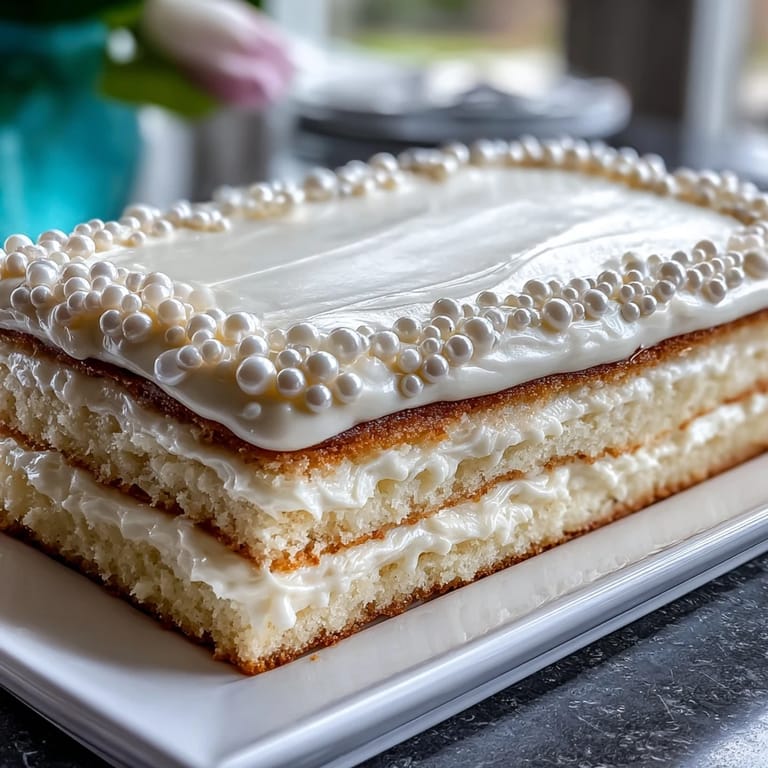
Save Months later, I got a text with a photo of the cake slice on my godson's plate, his smile huge behind it. His grandmother had asked for the recipe because her neighbor wanted something similar for a wedding. That's when a recipe transforms from instructions on a page into something that ripples outward, touching celebrations and memories you'll never fully know about.
Why This Cake Works for Celebrations
A sheet cake is democratic in the best way—it feeds generously without requiring you to become a pastry chef. The vanilla butter base is familiar enough that people relax into enjoying it, while the pearl fondant elevates it visually so it feels like an occasion. I've noticed that guests are always surprised by how moist and flavorful it stays, even on the second day of a celebration weekend. The fondant, which sounds fancy, is actually quite forgiving once you get over your fear of handling it.
Working with Fondant Without Panic
Fondant intimidates people, but it's really just sweetened dough that responds to warmth and patience. If it cracks while you're smoothing it, a tiny dab of water heals it. If it tears, you patch it with another piece and keep going. I once had a piece tear almost completely away from the surface, and instead of panicking, I arranged edible pearls to cover the spot, creating an intentional design element. The cake looked even more deliberate for my improvisation.
Timing and Make-Ahead Tips
You can bake the cake the day before a celebration and wrap it tightly, which means you're only decorating on the morning of your event. This alone reduces stress considerably and lets you approach the fondant work with a calm hand rather than rushed energy. The buttercream can be made several hours ahead and stored in a cool place. Even the fondant decoration can be done hours before serving if you keep the cake somewhere cool and out of direct sunlight.
- Wrap the baked cake in plastic wrap and store it at room temperature for up to two days before decorating.
- Make buttercream up to eight hours ahead and cover it so it doesn't pick up any fridge flavors.
- Once decorated, keep the finished cake out of warm kitchens and direct heat, as fondant softens quickly.
 Save
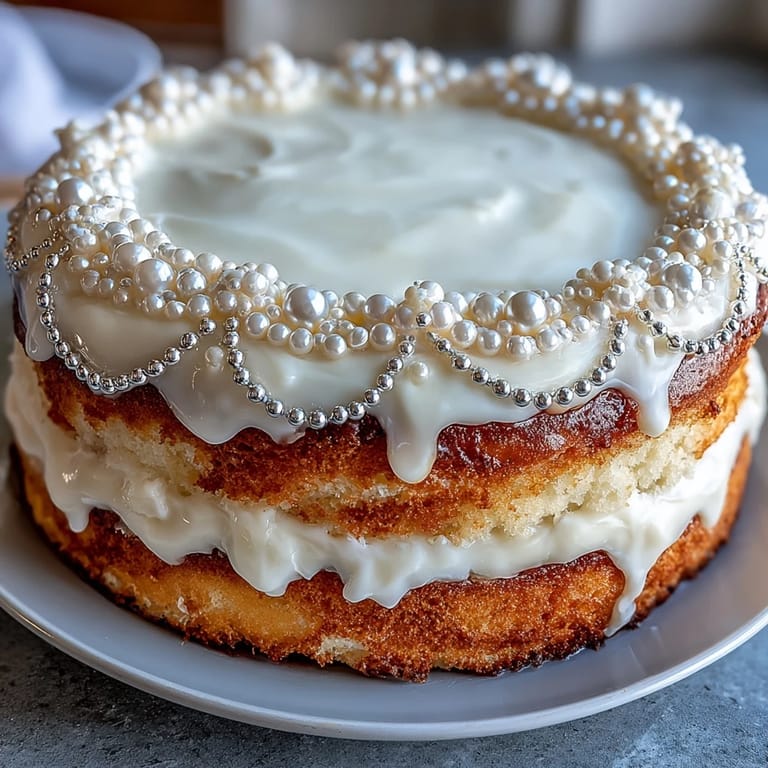
Save This cake has become my go-to for celebrations because it trusts you with the outcome—it won't betray you if you follow the steps honestly. It's beautiful without being temperamental, and that's a rare combination worth remembering.
Recipe FAQs
- → How do I ensure the cake stays moist after baking?
Use room temperature ingredients and avoid overmixing the batter. Proper cooling before applying buttercream and fondant helps maintain moisture.
- → What is the best way to roll out fondant without tearing?
Lightly dust your surface with powdered sugar and roll to about 1/8 inch thickness. Work gently and evenly to prevent tears.
- → Can I prepare this cake in advance?
Yes, the cake can be baked a day ahead and tightly wrapped before fondant application to preserve freshness.
- → How do I get the pearl fondant to shine?
Brushing lightly with water or a mixture of corn syrup and water, followed by dusting with pearl luster dust, adds a shimmering effect.
- → Are there alternatives to vanilla for flavoring?
Substituting half the vanilla with almond extract offers a lighter, nutty flavor variation.