 Save
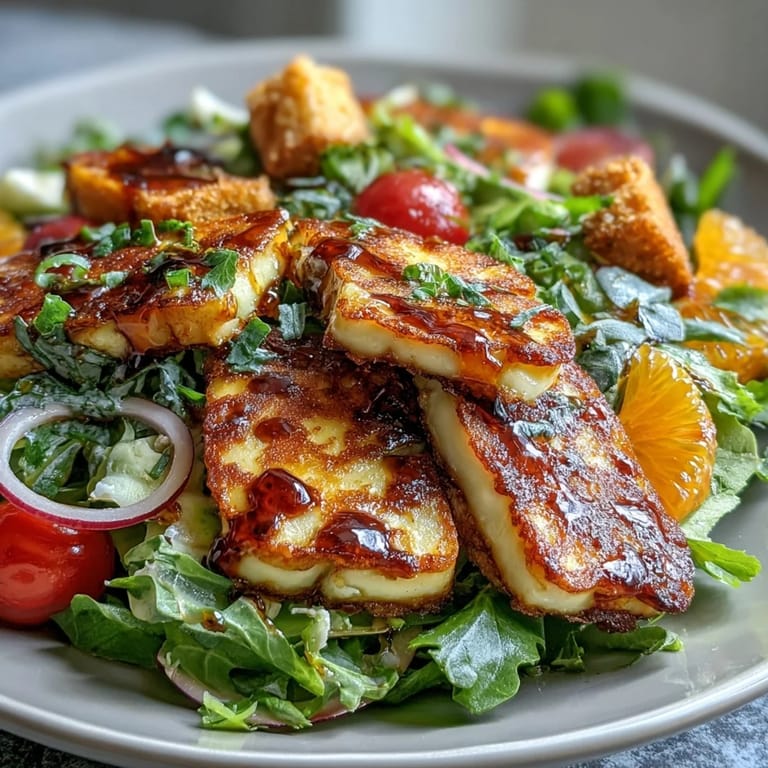
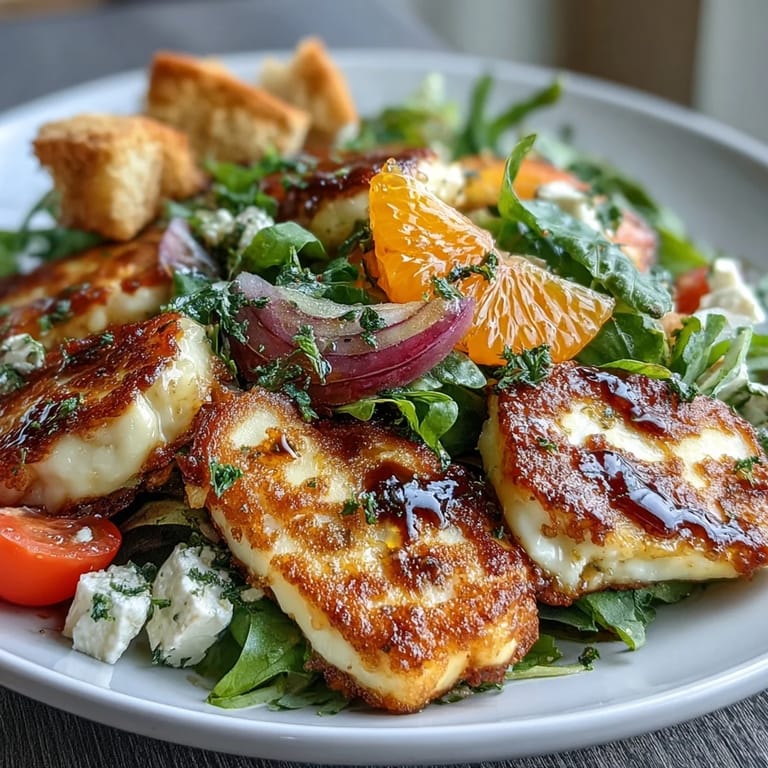
Save There's something about the moment when a warm halloumi slice hits a cold bed of greens that made me fall for this salad. I was experimenting with Middle Eastern flavors one late afternoon, standing in my kitchen with blood oranges rolling across the counter, and I thought: what if I combined the salty squeak of cheese with the bright acidity of citrus? The result was this fattoush that somehow feels both elegant and utterly approachable, like a dish that knows exactly what it wants to be.
I made this for my sister on a Sunday when she was going through one of those phases where she was convinced she could only eat salad for a week. She took one forkful and the whole theory fell apart, mostly because she couldn't resist the warm halloumi. We ended up sitting on the back step, sharing one bowl between us, talking about nothing important while the summer light got golden.
Ingredients
- Halloumi cheese, 200 g sliced into 1 cm pieces: This cheese has a high melting point, so it actually gets crispy instead of turning into a puddle, which is kind of the whole magic trick here.
- Blood oranges, 2 peeled and segmented: Their deep crimson color and slightly tart-sweet flavor add both visual drama and complexity that regular oranges can't quite match.
- Mixed salad greens, 150 g (romaine, arugula, parsley, mint): The combination of textures and flavors keeps things interesting; I've learned that using actual herbs instead of just lettuce makes all the difference.
- Cucumber, 1 small diced: This stays crisp if you add it just before serving, keeping everything bright and hydrating.
- Cherry tomatoes, 8 halved: They're sweeter than large tomatoes and won't water down your salad with excess juice.
- Red onion, ½ small thinly sliced: A thin slice gives you that sharp bite without overpowering everything else.
- Radishes, 2 thinly sliced: They add a peppery crunch that balances the richness of the cheese.
- Sourdough bread, 2 thick slices cut into cubes: Sourdough's tang complements the dressing better than plain bread ever could.
- Olive oil for croutons, 2 tbsp: Good oil makes the difference between croutons that taste like cardboard and ones you'll steal off your plate.
- Sea salt for croutons, pinch: A light hand here keeps you from making them too salty.
- Extra virgin olive oil, 3 tbsp: This is where you don't skimp; it's the backbone of the dressing and you'll taste every penny.
- Fresh lemon juice, 1½ tbsp: Squeeze it yourself if you can, because bottled juice tastes tired by comparison.
- Pomegranate molasses, 1 tbsp: This is the secret ingredient that nobody expects; it adds a sophisticated tartness that ties everything together.
- Sumac, 1 tsp: It's slightly lemony and floral, giving the dressing its distinctive personality without being overwhelming.
- Ground black pepper, ¼ tsp: Just enough to remind you it's there.
- Sea salt, ¼ tsp: Taste as you go; you can always add more.
Tired of Takeout? 🥡
Get 10 meals you can make faster than delivery arrives. Seriously.
One email. No spam. Unsubscribe anytime.
Instructions
- Get your croutons golden:
- Preheat your oven to 200°C and toss those sourdough cubes with olive oil and sea salt, then spread them out on a baking tray where they have room to breathe. Bake for 8 to 10 minutes, shaking the tray halfway through if you remember, until they're golden brown and crispy all over.
- Fry the halloumi until it squeaks:
- Heat a non-stick skillet over medium heat and fry each halloumi slice for about 2 to 3 minutes per side until you get that golden-brown crust. The cheese will actually squeak a little when you cut into it, which is how you know you've done it right; drain it on a paper towel for just a moment.
- Build your salad base:
- In a large salad bowl, combine all your greens, cucumber, cherry tomatoes, red onion, radishes, and blood orange segments, keeping everything loose and not packed down. At this point you can let it sit for a few minutes if you need to get the dressing ready.
- Whisk the dressing together:
- In a small bowl, whisk together the extra virgin olive oil, fresh lemon juice, pomegranate molasses, sumac, black pepper, and sea salt until it comes together. Taste it on a piece of lettuce to make sure it's balanced; if it's too sharp, add a touch more oil.
- Bring it all together:
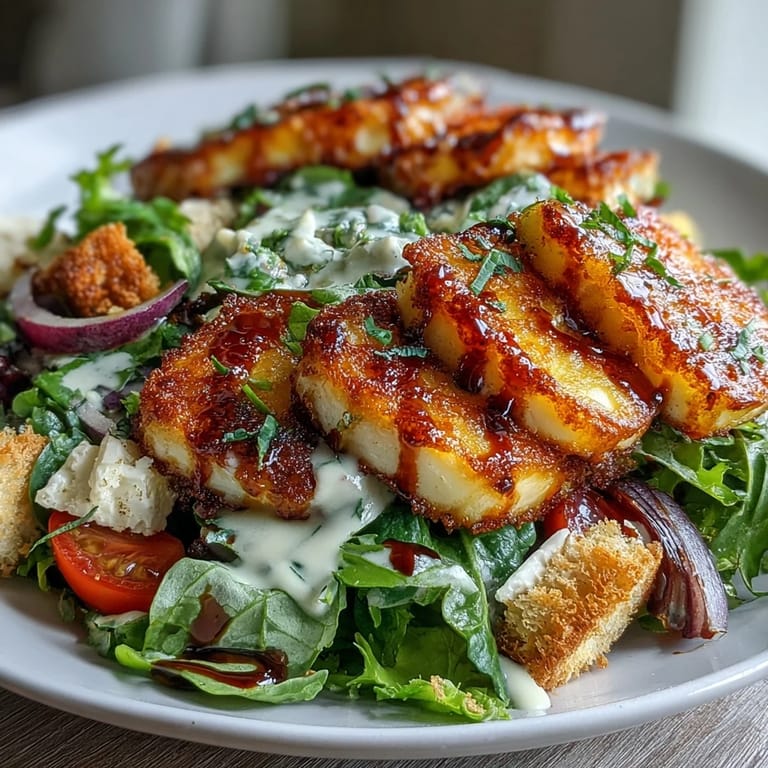
- Add the warm fried halloumi and crispy croutons to your salad bowl, then drizzle the dressing over everything and toss gently so you don't crush the delicate leaves. Do this step right before serving so the croutons stay crispy and the cheese is still warm.
- Serve immediately:
- Transfer to plates while everything is at its best, with the halloumi still warm and the greens still perky.
 Save
Save My friend who's usually skeptical about anything remotely healthy actually asked for the recipe after eating this, which felt like the highest compliment. That's when I realized it wasn't really about the salad being good for you, it was about it being genuinely delicious in a way that made you feel satisfied and energized at the same time.
The Story Behind Sumac and Pomegranate Molasses
I spent an embarrassing amount of time wandering around specialty grocery stores looking for pomegranate molasses before I found it, and when I finally did, I started using it in everything. But what I learned is that this dressing represents something fundamental about Middle Eastern cooking, this balance between tart and rich, herbaceous and warm, that transforms a simple collection of vegetables into something with actual soul. Once you taste what pomegranate molasses does to a dressing, you understand why it's been used in kitchens around the Mediterranean and the Levant for centuries.
Why Timing Matters More Than You Think
There was one night I made this salad about two hours before my guests arrived, thinking I was being efficient and organized. Everything got soggy, the croutons lost their crunch, and I learned the hard way that this particular salad is a now-type of dish that doesn't appreciate being made in advance. Since then I prepare everything ahead, but I don't actually assemble and dress it until the absolute last minute, which somehow makes the whole process feel more alive and improvisational anyway.
Customizing Without Losing the Plot
The beauty of this salad is that it's confident enough to handle substitutions and additions without losing its identity. You can swap the blood oranges for regular oranges or even grapefruit if that's what you have, use walnuts or pistachios for extra crunch if you want something more substantial, and you can absolutely scatter pomegranate seeds on top for both color and an extra burst of tartness. The core flavors are strong enough that it stays balanced and interesting no matter what direction you take it.
- If you can't find pomegranate molasses, you can make a substitute by reducing pomegranate juice with a bit of lemon juice, though the flavor won't be quite as complex.
- Toasted pistachios add a subtle bitterness that plays beautifully against the sweet blood orange and salty cheese.
- Fresh mint scattered on top at the very end keeps its flavor bright instead of getting bruised by the tossing.
 Save
Save This salad has become my answer to the question of what to make when I want something that feels special but doesn't demand a lot of fuss. Every time I serve it, someone asks for the recipe, and I realize it's because it tastes like someone actually cared enough to put thought into every single component.
Recipe FAQs
- → Can I make the croutons ahead of time?
Absolutely! Bake the sourdough croutons up to 2 days in advance and store them in an airtight container at room temperature. They'll stay perfectly crispy and ready to toss when you're ready to assemble.
- → What can I substitute for pomegranate molasses?
If you don't have pomegranate molasses, try reduced balsamic glaze or a mix of maple syrup with extra lemon juice. The key is achieving that sweet-tangy balance that cuts through the rich halloumi.
- → How do I prevent the halloumi from getting rubbery?
Don't overcook the halloumi—just 2-3 minutes per side until golden is perfect. High heat creates a nice crust while keeping the interior soft and melty. Serve immediately after frying for the best texture.
- → Can I use regular oranges instead of blood oranges?
Yes! Navel oranges work wonderfully as a substitute. While you'll miss the stunning ruby-red color, the sweet citrus flavor remains just as delicious against the salty halloumi and tangy dressing.
- → Is this best served warm or cold?
This dish shines when served immediately while the halloumi is still warm and the croutons retain their crunch. The contrast of warm cheese against cool, fresh greens is part of what makes this salad so satisfying.
- → Can I add protein to make it more filling?
The halloumi provides 13g of protein per serving, but you could add chickpeas, grilled chicken, or quinoa to bulk it up further. Toasted nuts like pistachios or walnuts also add extra protein and crunch.