 Save
Save There's something about January that makes me crave bowls like this one—not the trendy kind you see everywhere, but the kind that actually fills you up and makes you feel like you're taking care of yourself. I discovered this particular combination on a gray afternoon when my fridge held nothing but root vegetables, some kale that was getting sad, and a jar of tahini I'd been meaning to use. What started as quiet improvisation in my kitchen turned into something I couldn't stop making, something that became my go-to when the weather turns cold and I need food that tastes as comforting as it is nourishing.
My neighbor Sarah came over one winter evening, exhausted from her job search, and I threw together four of these bowls while we talked in my kitchen. By the end of the meal, she'd finished hers and was already asking for the recipe, saying it was the first time in weeks she'd felt genuinely satisfied. That's when I knew this wasn't just a bowl—it was the kind of food that quietly does something good, nourishes both body and spirit without making a fuss about it.
Ingredients
- Farro or quinoa: Farro has a hearty, slightly chewy texture that feels substantial in winter, but quinoa works beautifully if you're cooking gluten-free or want something lighter and fluffier.
- Carrots, parsnips, and sweet potato: These three together create a natural sweetness when roasted, balancing the earthiness of everything else, and they stay tender without falling apart.
- Kale or Swiss chard: Choose kale if you want something sturdy that holds up to storage, or chard if you prefer a gentler, slightly sweeter green that wilts down beautifully.
- Tahini: This is the soul of the dressing—make sure yours is fresh and creamy, not separated or grainy, or the whole thing will feel off.
- Lemon juice: Fresh squeezed makes a visible difference in brightness, but bottled works in a pinch if that's what you have.
- Maple syrup: It adds a subtle warmth that feels intentional; honey works too, but maple feels right for this dish.
- Olive oil: Use good oil for roasting since it actually matters here—it's not hiding in a sauce, it's bringing out the vegetables' sweetness.
Tired of Takeout? 🥡
Get 10 meals you can make faster than delivery arrives. Seriously.
One email. No spam. Unsubscribe anytime.
Instructions
- Heat your oven and prep the roots:
- Set your oven to 400°F and toss those chopped vegetables with olive oil, thyme, salt, and pepper like you're getting them ready for a good time. Spread them on a baking sheet in a single layer so they'll actually caramelize instead of steam.
- Start your grains:
- While the vegetables are roasting, rinse your grains under cool water and combine them with broth in a saucepan. Bring it to a boil, then lower the heat and cover—let it simmer gently until the grains are tender and have absorbed most of the liquid.
- Roast until golden:
- Your vegetables should spend about 25 to 30 minutes in the oven, and halfway through, give them a stir so they brown evenly on all sides. You'll know they're done when the edges are caramelized and a fork goes through them without resistance.
- Wilt the greens:
- Heat a large skillet with olive oil, add minced garlic, and let it bloom for just a moment before adding your chopped greens. Stir constantly for a few minutes until they've collapsed into tenderness, which is faster than you'd think.
- Make the dressing:
- Whisk tahini, lemon juice, maple syrup, mustard, salt, and pepper together with warm water, adding it gradually until the dressing reaches the consistency you want. It should be pourable but thick enough to cling to everything.
- Assemble your bowl:
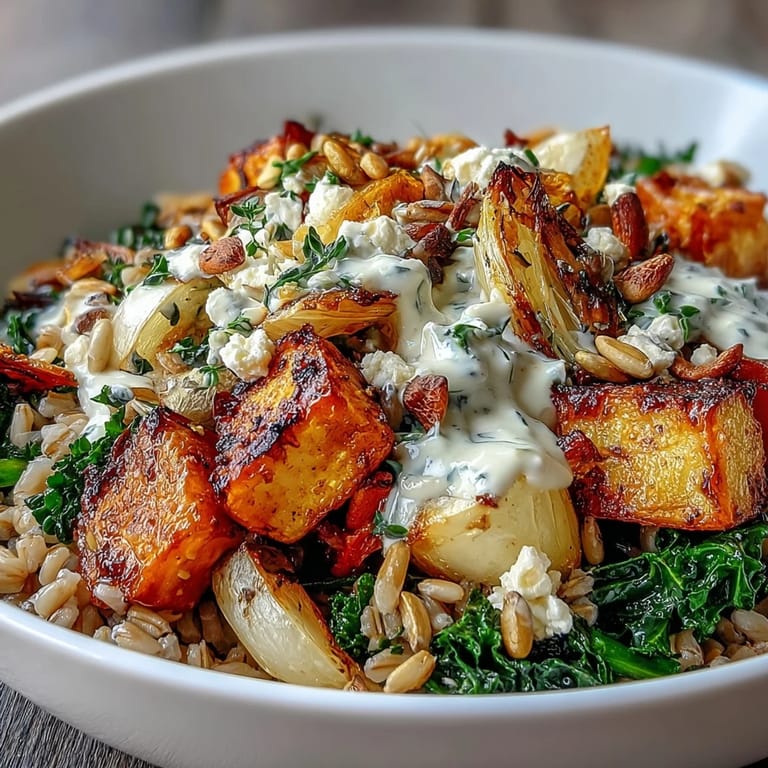
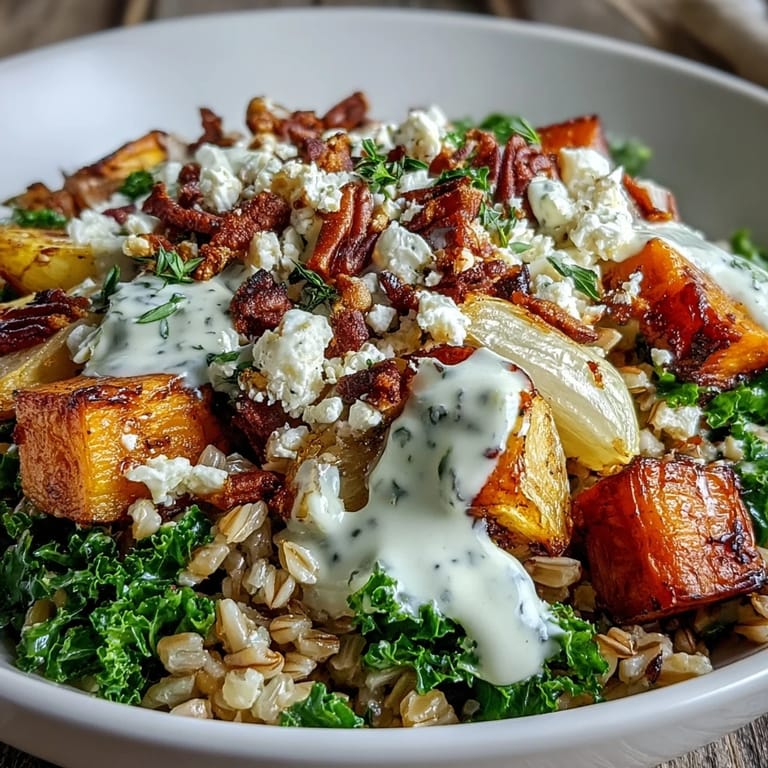
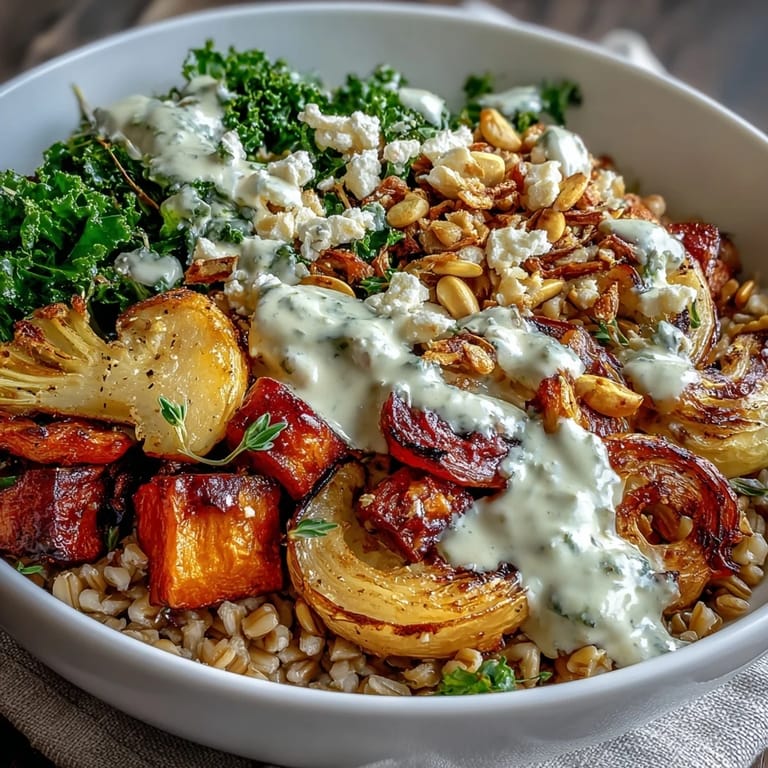
- Divide warm grains between bowls and arrange the roasted vegetables and sautéed greens on top like you're creating something beautiful. Drizzle generously with dressing so every bite gets that creamy, tangy flavor.
- Finish and serve:
- Scatter pumpkin seeds, feta cheese, and fresh parsley over the top if you're using them, then serve while everything is still warm.
 Save
Save There's a quiet comfort in eating something this wholesome, something built from things that grew in the earth and took actual time to prepare. This bowl stopped being just dinner on the night I realized I was making it three times a week without planning to, reaching for it whenever I needed something that felt both indulgent and honest.
Why This Works in Winter
Cold months call for warm, grounding food, and this bowl delivers exactly that without feeling heavy or one-note. The roasted vegetables provide natural sweetness and substance, the grains anchor everything in a way that's deeply satisfying, and the creamy dressing ties it all together into something that feels intentional and nourishing. There's something almost meditative about building a bowl like this, watching the colors layer together—golden grains, caramelized roots, dark wilted greens, pale creamy dressing.
Making It Your Own
This bowl is more of a blueprint than a rigid recipe, and part of its charm is how it adapts to what you have and what you're craving. I've made it with roasted beets instead of carrots, with chickpeas stirred through for extra protein, with arugula instead of kale when I wanted something peppery and bright. The tahini dressing is forgiving too—if you don't have maple syrup, use honey or even a pinch of brown sugar, and if tahini isn't your thing, a simple olive oil and lemon vinaigrette works just as well.
Storage and Meal Prep
This is genuinely one of the best meals for making ahead, which is partly why I fell in love with it in the first place. You can roast the vegetables and cook the grains the night before, store them separately in the fridge, and then sauté the greens fresh just before eating for maximum brightness. The dressing also keeps beautifully for up to five days, so you can make a double batch and use it all week.
- Keep the dressing separate from everything else until you're ready to eat, or it will soften the grains over time.
- If you make this ahead, warm the grains gently before assembling—cold grains are fine, but warm ones feel infinitely more comforting.
- Pack components in separate containers if you're taking this to work, and assemble just before eating for the best texture and flavor.
 Save
Save This is the kind of bowl that becomes a friend in your kitchen, something you return to again and again because it just works. Make it once, and you'll understand why it's become such a steady part of how I eat when I want to feel both nourished and genuinely satisfied.
Recipe FAQs
- → What grains work best for this bowl?
Farro provides a nutty chew and quinoa offers a lighter protein-rich option. Both absorb flavors beautifully and pair well with roasted vegetables. Quinoa cooks faster at 20 minutes, while farro needs about 30 minutes to become tender.
- → Can I prepare the components ahead?
Absolutely. Roast vegetables and cook grains up to 3 days in advance. Store separately in airtight containers. Reheat vegetables and grains gently before assembling. The dressing keeps well for a week in the refrigerator—just whisk again before using.
- → How do I make this dish protein-rich?
Add roasted chickpeas, grilled chicken strips, or pan-seared tofu. Hemp seeds, toasted walnuts, or a soft-boiled egg also boost protein. The tahini dressing already provides about 3 grams of protein per serving.
- → What other vegetables can I use?
Beets, turnips, butternut squash, or Brussels sprouts roast beautifully alongside the root vegetables. For greens, try Swiss chard, spinach, or collard greens. Seasonal adaptability makes this bowl versatile year-round.
- → Is the dressing adjustable?
The tahini dressing easily adapts to taste. Add more maple syrup for sweetness, extra lemon for brightness, or a clove of garlic for depth. Thin with additional warm water until pourable. The consistency should coat the back of a spoon.
- → Can this be served cold?
Yes, this makes excellent meal prep. Let components cool completely before assembling. The flavors meld overnight, and the texture holds up well. Pack the dressing separately and drizzle just before eating.