 Save
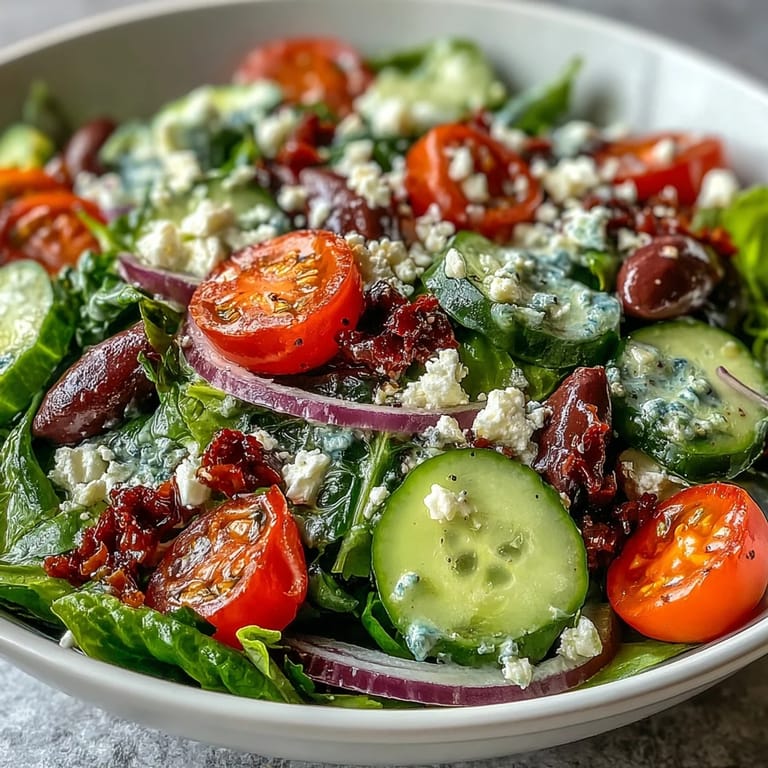
Save There's something about the first warm day of spring that makes me crave this salad—not the heavy kind you feel obligated to eat, but the kind that tastes like sunshine in a bowl. My neighbor Maria taught me the trick years ago: she'd make this exact salad for her family gatherings, and everyone would ask for seconds, which never happens with salads. It's the balance, she'd say, the way the briny olives play against the creamy feta and that tangy dressing that somehow makes every vegetable taste sharper and more alive. I've made it countless times since, and it's become my go-to when I want something that feels indulgent but isn't.
I made this salad for my book club last summer, and someone actually set down their wine to ask for the recipe—that's when I knew it was special. What I love most is how it adapts: I've stretched it for ten people by doubling the greens, I've made it heartier with grilled chicken when my partner wanted more substance, and I've even made it vegan for my sister just by swapping the feta. It's the kind of dish that whispers rather than shouts, which is exactly why people keep coming back for more.
Ingredients
- Spring mix (baby lettuces, arugula, spinach): The foundation deserves to be fresh and tender, so buy it the day you plan to use it and store it in the coldest part of your fridge; arugula brings a peppery note that makes everything taste more sophisticated.
- Cherry tomatoes: Halve them just before assembling so they stay plump and juicy instead of weeping into the salad; if you only find large tomatoes, cut them into quarters and you'll be fine.
- Cucumber: Slice it thin and eat a piece raw to confirm it's crisp; watery cucumbers will make the salad soggy if you dress it too far in advance.
- Kalamata olives: Buy them pitted if you can because unpitted olives turn a simple salad assembly into a pit-spitting obstacle course; they contribute a deep, briny flavor that's impossible to replicate.
- Red onion: Slice it paper-thin so it doesn't overpower the delicate greens; the raw bite mellows slightly as it sits with the dressing.
- Feta cheese: Crumble it by hand right before serving so the pieces stay chunky and visible instead of turning into dust; the tanginess is the salad's secret weapon.
- Extra-virgin olive oil: This is not the moment to use budget oil; you'll taste every compromise, so splurge on something you'd actually want to drink.
- Red wine vinegar: It's sharper than white vinegar and creates that restaurant dressing tang that makes people ask what you did differently.
- Dried oregano: It blooms beautifully in the acidic dressing; I crush it between my palms before adding it to release the oils.
- Garlic clove: Mince it fine so it distributes evenly through the dressing instead of leaving you with surprise garlic chunks.
- Dijon mustard: It acts as an emulsifier that helps the oil and vinegar stay together instead of separating within an hour.
- Salt and black pepper: Taste the dressing before you pour it and adjust to your preference; some feta is saltier than others, so you might need less salt than the recipe suggests.
Tired of Takeout? 🥡
Get 10 meals you can make faster than delivery arrives. Seriously.
One email. No spam. Unsubscribe anytime.
Instructions
- Gather your greens and vegetables:
- Wash the spring mix and spin it dry because water is the enemy of a crisp salad, then arrange it in your largest bowl so you have room to toss everything together without sending lettuce flying across the counter. Prep all your vegetables while the greens are still draining.
- Create the dressing:
- Pour the olive oil and red wine vinegar into a small jar or bowl, then add the oregano, minced garlic, mustard, salt, and pepper. Whisk or shake vigorously for about thirty seconds until the mixture turns pale and slightly thicker, which means the mustard has done its job of binding the oil and vinegar together.
- Combine the salad components:
- Toss the greens with the tomatoes, cucumber, olives, and red onion in your large bowl, using your hands or salad tongs so you can feel when everything is evenly mixed. Pour the dressing over top just before serving and toss gently so the tender leaves don't bruise.
- Finish with feta and serve:
- Scatter the crumbled feta cheese over the top and serve immediately while everything is still cold and crisp. The feta melts slightly into the warm oil from the dressing, which is honestly the best part.
 Save
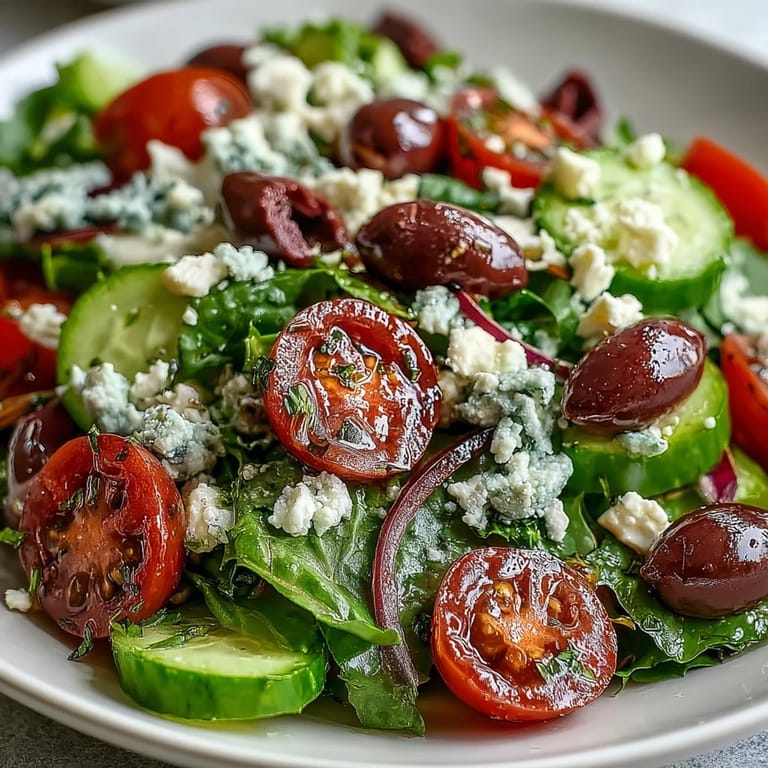
Save My daughter made this for a school potluck when she was twelve, and a parent actually asked if I'd catered it because it looked too polished for a homemade dish. That moment—when she realized she could make something beautiful and delicious without anyone's help—stayed with both of us more than any store-bought trophy ever could.
The Secret to Restaurant-Quality Dressing
The dressing is where the magic happens, and most homemade vinaigrettes fail because people either don't whisk long enough or they add the oil too slowly. The mustard isn't there for flavor; it's an emulsifier that helps trap the oil droplets in the vinegar so everything stays suspended instead of separating. I learned this the hard way after making limp salads for years, thinking I just didn't have a gift for raw vegetables. Once I started whisking properly, everything changed.
Variations That Actually Work
This salad is endlessly flexible, which is why it's lived in my regular rotation for so long. I've added grilled shrimp on nights when I needed something more substantial, scattered chickpeas for vegetarian protein, and once even tossed in some leftover roasted beets because they were about to expire. The core of crisp greens and bright dressing holds everything together, so you can play around without worrying you'll ruin it.
Why This Salad Wins Every Time
It's the kind of dish that doesn't pretend to be something it's not, which is exactly why people trust it. When you make salad this fresh and simple, there's nowhere to hide, so every ingredient has to pull its weight and shine. The olives bring funk, the feta brings richness, the greens bring texture, and the dressing brings everything into harmony without overpowering the delicate flavors underneath.
- Make double the dressing and keep it in a jar in your fridge for up to three days so you can dress multiple salads throughout the week.
- If you're serving a crowd, assemble the salad components in a large platter instead of a bowl so guests can see everything and serve themselves.
- Toast some pine nuts separately and sprinkle them on right before serving if you want an extra layer of nuttiness and crunch that feels like a celebration.
 Save
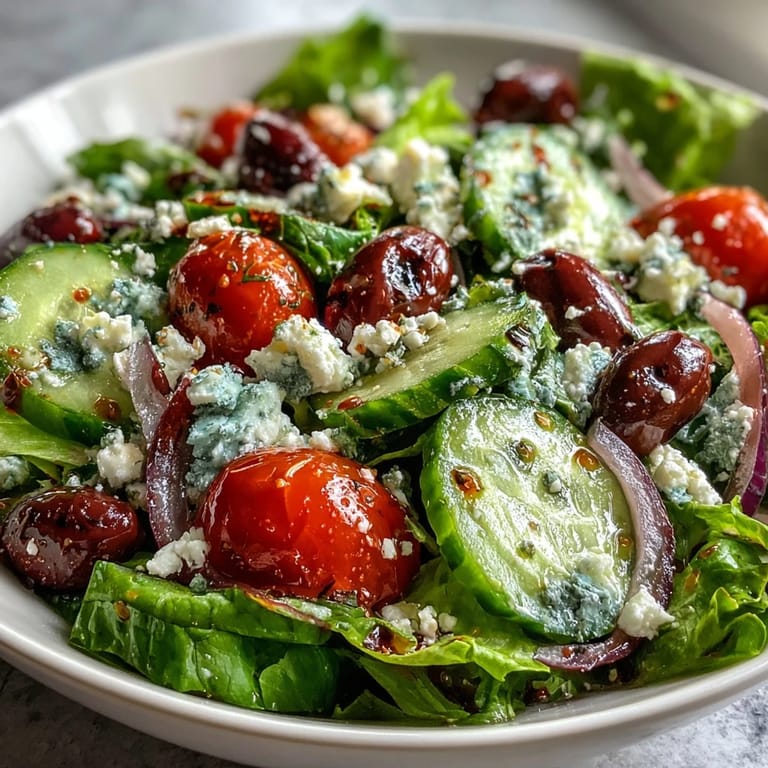
Save This salad has become my answer to so many kitchen questions: what to serve when you want something light, what to bring to a gathering where you don't know what others are making, and what to eat when you want to feel like you're on a sun-soaked Mediterranean coast without leaving your kitchen. Make it once and you'll understand why it never really leaves.
Recipe FAQs
- → How long does this Mediterranean bowl stay fresh?
Best enjoyed immediately after tossing with dressing. The dressed salad keeps for 1-2 days refrigerated, though the greens may wilt slightly. Store dressing separately and add just before serving for maximum freshness.
- → Can I prepare this in advance?
Prep all vegetables and make the dressing up to 24 hours ahead. Store components separately in airtight containers. Toss together right before serving to maintain crisp texture and vibrant appearance.
- → What proteins work well with this bowl?
Grilled chicken breast, seasoned shrimp, or chickpeas make excellent additions. For a heartier meal, try adding grilled halloumi, baked tofu, or leftover roasted vegetables.
- → How can I make this dairy-free?
Substitute feta with vegan feta alternatives, diced avocado, or extra olives for that savory briny element. Nutritional yeast or chopped almonds can also provide a savory, cheesy flavor profile.
- → What can I serve alongside this bowl?
Pair with warm pita bread, hummus, and tzatziki for a classic Mediterranean spread. Works beautifully alongside grilled lamb, chicken souvlaki, or as part of a larger mezze platter.
- → Can I use different greens?
Absolutely. Romaine, mixed baby greens, kale, or even fresh herbs like mint and parsley work wonderfully. Just adjust quantities based on leaf size and texture for balanced bites.