 Save
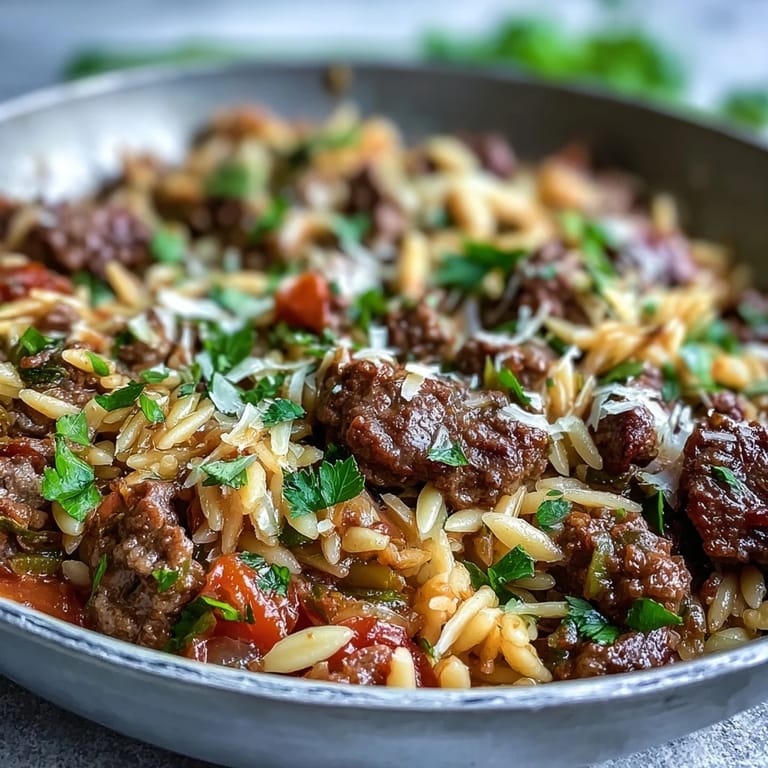
Save One rainy Tuesday, I stood staring at my pantry wondering what could possibly turn into dinner without a grocery run. A box of orzo caught my eye, leftover from some long-forgotten recipe, and suddenly I remembered my friend Sofia's one-pan beef skillet she'd whipped up during a camping trip. I grabbed ground beef from the freezer, a bell pepper from the crisper, and decided to wing it. The smell that filled my kitchen an hour later—garlicky, tomatoey, with that unmistakable richness of simmering beef—convinced me I'd stumbled onto something worth keeping.
I made this for my nephew's birthday dinner because he's picky about textures and won't touch anything that looks too complicated. He devoured two bowls and asked if we could have it every week. Watching him scrape the skillet with his spoon, hunting for the last bits of cheesy orzo, felt like a small victory. Sometimes the simplest meals are the ones that stick with people.
Ingredients
- Ground beef: The foundation of the dish, providing deep savory flavor that infuses the broth as it cooks, and it browns beautifully when you don't rush it.
- Orzo pasta: These tiny rice-shaped noodles absorb the tomato broth like little sponges, turning creamy and rich without any cream at all.
- Onion: Finely chopped so it melts into the background, adding sweetness and body to the base without overpowering the other flavors.
- Bell pepper: Whether you choose red for sweetness or green for a sharper bite, it adds color and a slight crunch that balances the tender beef.
- Diced tomatoes: The juice is just as important as the chunks, creating a bright, tangy base that keeps the dish from feeling heavy.
- Frozen peas: Stirred in at the end so they stay sweet and pop with color, plus they're always in my freezer for emergencies like this.
- Garlic: Just two cloves, minced fine, because garlic loves hanging out with beef and tomatoes.
- Beef broth: This is what turns the skillet into a simmering pot of comfort, so use a good-quality broth if you can.
- Dried oregano and basil: Classic herbs that remind me of Sunday sauces, they bring warmth and familiarity without needing fresh bunches.
- Parmesan cheese: Grated and stirred in at the end, it melts into the orzo and adds a salty, nutty finish that makes everything taste more luxurious.
- Olive oil: A couple of tablespoons to start the sauté, giving the vegetables a golden edge and preventing anything from sticking.
- Salt and black pepper: Simple seasonings that let the natural flavors shine through, adjusted to your taste as you go.
- Fresh parsley: Chopped and scattered on top just before serving, it adds a fresh pop of color and a hint of brightness.
Tired of Takeout? 🥡
Get 10 meals you can make faster than delivery arrives. Seriously.
One email. No spam. Unsubscribe anytime.
Instructions
- Start with the aromatics:
- Heat olive oil in a large skillet over medium heat, then add the finely chopped onion and let it cook until it turns translucent and smells sweet, about 3 to 4 minutes. Stir in the minced garlic and diced bell pepper, sautéing for another 2 to 3 minutes until the pepper softens and the garlic becomes fragrant.
- Brown the beef:
- Increase the heat to medium-high and add the ground beef, breaking it up with a spatula as it cooks until it's browned all over, about 5 to 7 minutes. If there's a lot of excess fat pooling in the pan, drain it off so the dish doesn't end up greasy.
- Build the broth:
- Add the diced tomatoes with their juice, beef broth, dried oregano, dried basil, salt, and black pepper, stirring everything together so the spices distribute evenly. Bring the mixture to a boil, then reduce the heat to medium-low and let it simmer for 10 minutes to let the flavors meld.
- Cook the orzo:
- Stir in the orzo pasta, making sure it's submerged in the liquid, then cover the skillet and cook for 10 to 12 minutes, stirring occasionally to prevent sticking. The orzo should be tender and most of the liquid absorbed, creating a creamy, risotto-like texture.
- Finish with peas and cheese:
- Fold in the frozen peas and cook for another 2 to 3 minutes until they're heated through and bright green. Remove the skillet from the heat and stir in the grated Parmesan cheese until it melts and coats everything in a silky, savory layer.
- Garnish and serve:
- Spoon the beef and orzo into bowls and top with freshly chopped parsley for a pop of color and freshness. Serve it hot, with extra Parmesan on the side if anyone wants more.
 Save
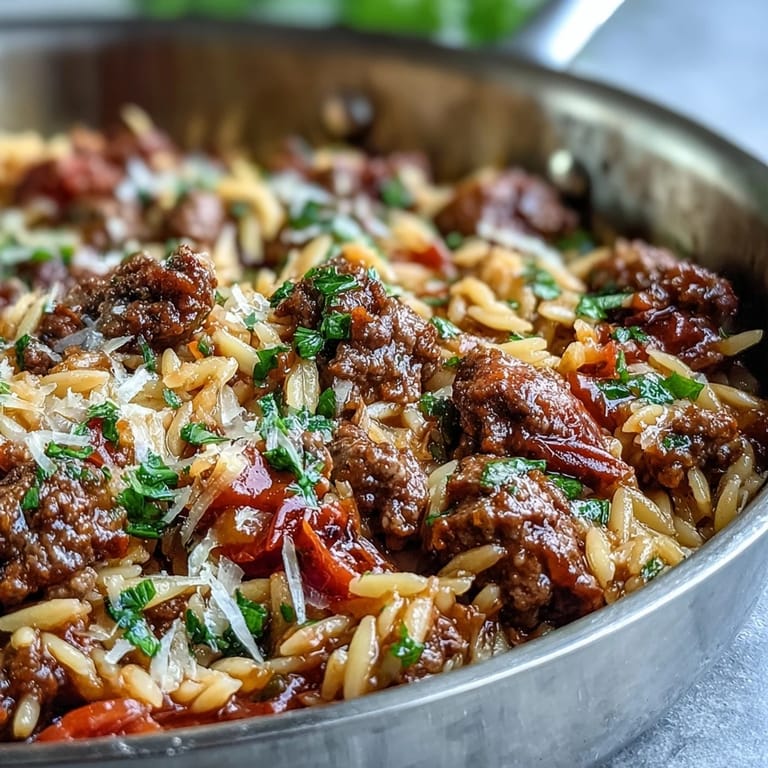
Save The first time I brought this to a potluck, someone asked if it was a family recipe passed down for generations. I laughed and admitted I'd invented it on a whim with whatever I had on hand. But that's the thing about good food—it doesn't need a pedigree, just flavors that make people want another bite.
Making It Your Own
This recipe is forgiving and loves improvisation. I've stirred in handfuls of fresh spinach at the end, swapped the bell pepper for zucchini or mushrooms, and even used ground turkey when I was trying to lighten things up. If you like heat, a pinch of red pepper flakes or a diced jalapeño with the garlic works wonders. The orzo will adapt to whatever vegetables or proteins you throw its way, soaking up new flavors without losing its comforting backbone.
Storage and Reheating
Leftovers keep beautifully in an airtight container in the fridge for up to three days. The orzo tends to absorb more liquid as it sits, so when you reheat it on the stovetop or in the microwave, add a splash of broth or water to loosen it up. I actually prefer it the next day when the flavors have had time to settle and deepen. Sometimes I'll crack an egg over a reheated portion and let it poach right in the skillet for a quick breakfast twist.
Serving Suggestions
This skillet is hearty enough to stand alone, but I've served it alongside a simple green salad with lemon vinaigrette or garlic bread for scooping up every last bit. A sprinkle of extra Parmesan or a dollop of sour cream on top can make it feel even more indulgent. If you're feeding a crowd, double the recipe and use a deeper skillet or a wide Dutch oven so everything cooks evenly.
- Pair it with a crisp white wine or a light red if you're feeling fancy.
- Top with fresh basil or a squeeze of lemon juice for brightness.
- Serve with crusty bread to mop up the tomato-broth goodness.
 Save
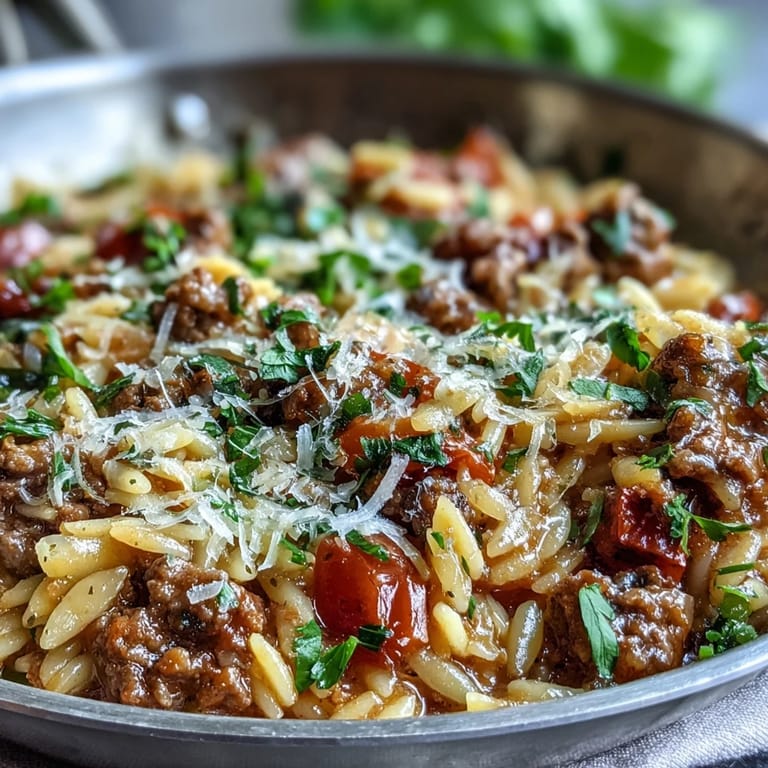
Save This is the kind of dinner that makes you feel like you've got it all together, even when you absolutely don't. It's warm, filling, and tastes like you spent way more time on it than you actually did.
Recipe FAQs
- → Can I make this dish ahead of time?
Yes, this beef and orzo skillet reheats beautifully. Store in an airtight container in the refrigerator for up to 3 days. The pasta continues to absorb liquid as it sits, so add a splash of beef broth when reheating to restore creaminess.
- → What other vegetables can I add?
Spinach, zucchini, mushrooms, or diced carrots work well. Add heartier vegetables like zucchini with the bell peppers, and quick-cooking greens like spinach during the last 2-3 minutes of cooking.
- → Can I use different pasta shapes?
Small pasta shapes like ditalini, small shells, or macaroni can substitute for orzo. Adjust cooking time as needed since different shapes may require more or less liquid to cook through properly.
- → How can I make this dish dairy-free?
Omit the Parmesan cheese or use a dairy-free Parmesan alternative. You can also add extra herbs or a squeeze of lemon juice at the end to brighten the flavors without dairy.
- → What protein substitutions work well?
Ground turkey, chicken, or Italian sausage make excellent alternatives. If using sausage, reduce the added salt and dried herbs since seasoned sausage adds plenty of flavor on its own.