 Save
Save My coworker used to bring these jewel-toned jars to work every Monday, and I'd watch her shake them up with hot water like some kind of lunch wizard. One rainy afternoon, she taught me the trick: layer everything dry, seal it tight, and you've got soup waiting whenever hunger strikes. I started making a week's worth on Sunday evenings, lining them up in the fridge like little edible insurance policies. The smell of garlic and Italian herbs hitting that boiling water became my favorite midday reset. Now I keep a jar in my bag more often than I'd like to admit.
I made a batch for my neighbor after she had surgery, and she texted me a photo of the empty jar with three heart emojis. She said it was the first thing that actually tasted like food, not just fuel. That's when I realized these jars aren't just convenient, they're a way to show up for people without making a big fuss. I've tucked them into care packages, brought them to potlucks, and left one on my sister's porch when she was too swamped to cook. They're small enough to feel casual but filling enough to actually help.
Ingredients
- Small pasta: Ditalini or mini shells hold up best because they cook evenly in the jar and don't turn to mush if you let it sit an extra minute.
- Dried red lentils: These little guys cook fast and add a creamy texture without any effort, plus they boost the protein so you actually feel full.
- Cannellini beans: I rinse them well to avoid any tinny taste, and they make the soup heartier without weighing it down.
- Zucchini, carrots, and celery: Dice them small and uniform so everything softens at the same rate, no crunchy surprises or mushy bits.
- Frozen green peas: They thaw perfectly in the hot water and add a pop of sweetness that balances the tomato.
- Baby spinach: I chop it roughly so it doesn't clump, and it wilts into silky ribbons that disappear into the broth.
- Sun-dried tomatoes: The oil-packed kind bring a deep, tangy richness that makes the whole jar taste more expensive than it is.
- Tomato paste: Just a spoonful turns plain water into a real tomato broth, and it dissolves completely if you stir well.
- Italian herbs and garlic powder: Dried seasonings are perfect here because they bloom in the hot water and fill your kitchen with that familiar Italian aroma.
- Vegetable bouillon cube: Crumble it on top so it melts evenly, and suddenly you've got restaurant-level depth without any extra work.
Tired of Takeout? 🥡
Get 10 meals you can make faster than delivery arrives. Seriously.
One email. No spam. Unsubscribe anytime.
Instructions
- Build your jars:
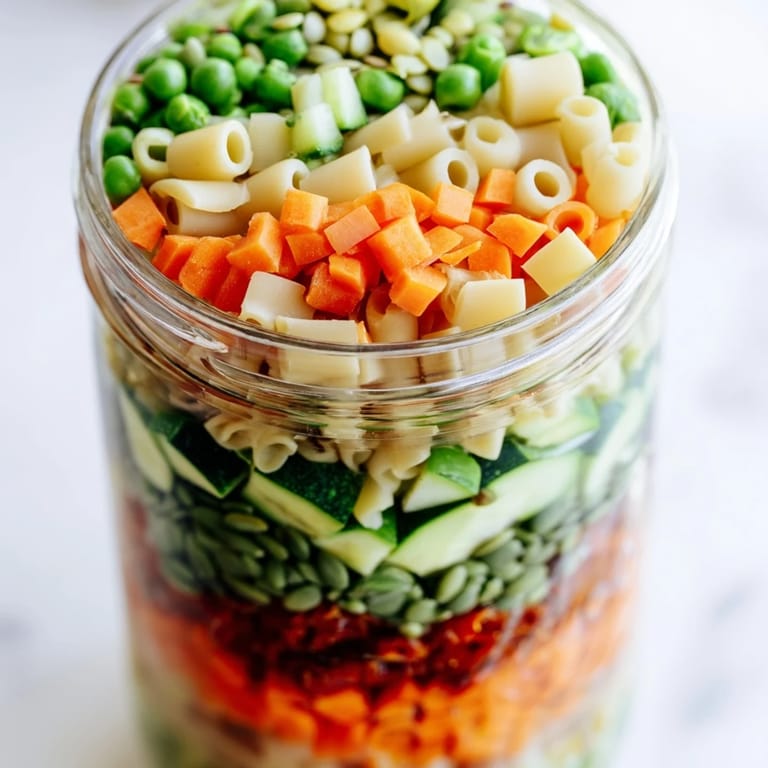
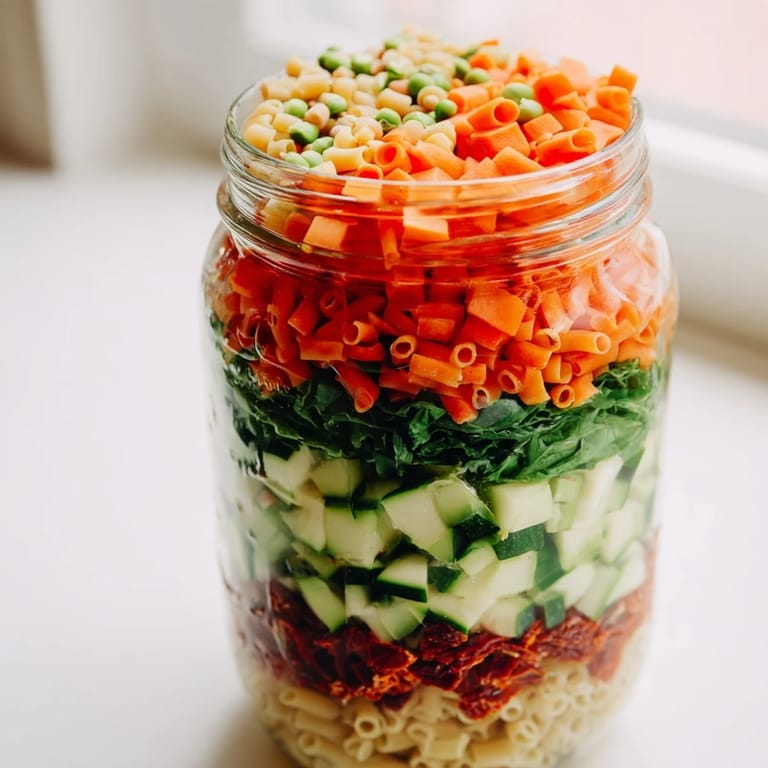
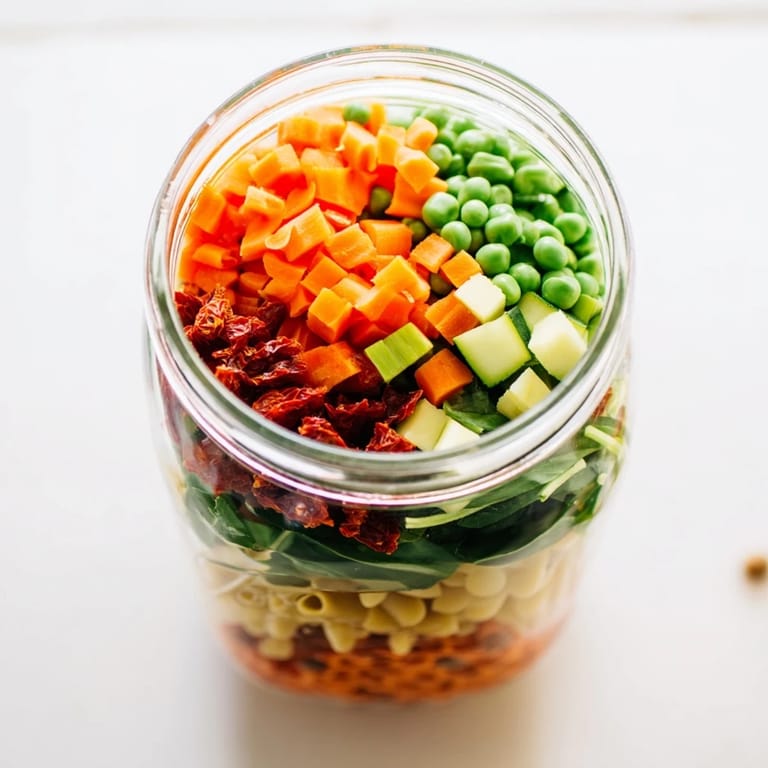
- Start with pasta at the bottom, then layer in lentils, beans, carrots, celery, zucchini, peas, spinach, sun-dried tomatoes, tomato paste, seasonings, and the crumbled bouillon cube on top. Press down gently with the back of a spoon to make everything fit snugly, but don't crush the vegetables.
- Seal and store:
- Screw the lids on tight and tuck the jars into the fridge for up to four days. They look pretty enough to leave on the front shelf where you'll actually remember to grab them.
- Add water and mix:
- Pour two cups of boiling water over the ingredients until they're covered, then stir well with a spoon or close the lid and shake gently to distribute everything. The tomato paste needs a little coaxing to dissolve, so don't skip the stirring.
- Let it cook:
- Wait ten to fifteen minutes for the pasta to soften and the flavors to meld, or microwave the open jar for three to four minutes if you're in a rush. Stir halfway through to make sure nothing sticks to the bottom.
- Finish and serve:
- Give it one last stir, taste for salt, and sprinkle Parmesan on top if you're feeling fancy. Eat it straight from the jar or pour it into a bowl if you want to feel more civilized.
 Save
Save I brought a jar to a friend's cabin weekend, and everyone thought I was some kind of genius when I pulled it out of my cooler. We boiled water on the camp stove, poured it in, and fifteen minutes later we had real soup under the stars. It felt like bringing a little piece of home into the woods, something warm and nourishing that didn't require a full kitchen. That night, soup in a jar stopped being a convenience hack and became something I actually looked forward to sharing.
Choosing Your Vegetables
I've swapped in diced bell peppers, green beans, and even finely chopped kale depending on what's in the crisper drawer. The key is cutting everything into small, even pieces so they all cook at the same speed. Frozen vegetables work beautifully because they're already prepped and hold their shape, but fresh ones taste brighter if you have the time. Avoid anything too watery like tomatoes or mushrooms, which can make the jar soggy before you even add water. Stick to sturdy vegetables that can sit tight for a few days without weeping or wilting.
Making It Your Own
Once you've made the base version a few times, you'll start seeing all the ways to twist it. I've stirred in a spoonful of pesto right before eating, added a squeeze of lemon for brightness, or tossed in leftover cooked chicken for extra protein. Sometimes I swap the Italian herbs for curry powder and coconut milk powder for a completely different vibe. The jar method is just a framework, and once you understand the ratios, you can fill it with whatever flavors you're craving that week.
Storage and Reheating Tips
These jars live happily in the fridge for up to four days, but I've never had them last that long because I always eat them first. If you want to make more than four, just double the recipe and line them up like little soldiers on the shelf. The microwave method is faster, but letting the jar sit with boiling water gives the flavors more time to marry, so I usually choose that route if I'm working from home. Just remember to remove the metal lid before microwaving, or you'll learn that lesson the loud way like I did.
- Label the jars with the date if you're meal prepping for the whole week so you eat the oldest ones first.
- Bring a jar to work in an insulated bag with a thermos of boiling water if you don't have a microwave nearby.
- Store any leftover cooked soup in the same jar in the fridge for up to two days, and it reheats even better the second time.
 Save
Save There's something quietly satisfying about opening the fridge and seeing a row of these jars, knowing that future you is already taken care of. It's not fancy, but it's the kind of recipe that makes life feel a little more manageable, one warm jar at a time.
Recipe FAQs
- → How long can I store the jars before adding water?
Store sealed jars in the refrigerator for up to 4 days before adding water. Ensure lids are tightened properly to maintain freshness and prevent ingredient oxidation.
- → Can I prepare these jars in advance for the whole week?
Yes, these jars are ideal for meal prep. Layer ingredients in four jars on Sunday and store refrigerated. Add boiling water each time you're ready to eat for maximum freshness and optimal pasta texture.
- → What's the best way to heat the jar?
Add 2 cups boiling water, cover, and let sit 10-15 minutes for gentle heating. Alternatively, microwave in an open jar (remove metal lid) for 3-4 minutes, stirring halfway through for even cooking.
- → Can I customize the vegetables?
Absolutely. Substitute any vegetables you prefer—bell peppers, tomatoes, broccoli, or kale work wonderfully. Maintain similar quantities and adjust seasonings to complement your choices.
- → How do I make this vegan and gluten-free?
Use gluten-free pasta instead of regular wheat pasta and omit Parmesan cheese. All other ingredients are naturally vegan. Verify that your bouillon cube and sun-dried tomatoes contain no animal products.
- → Does layering order matter?
Yes, layering prevents pasta from clumping and ensures even distribution. The order allows denser items (pasta, lentils, beans) to settle at the bottom while vegetables and seasonings distribute properly throughout.