 Save
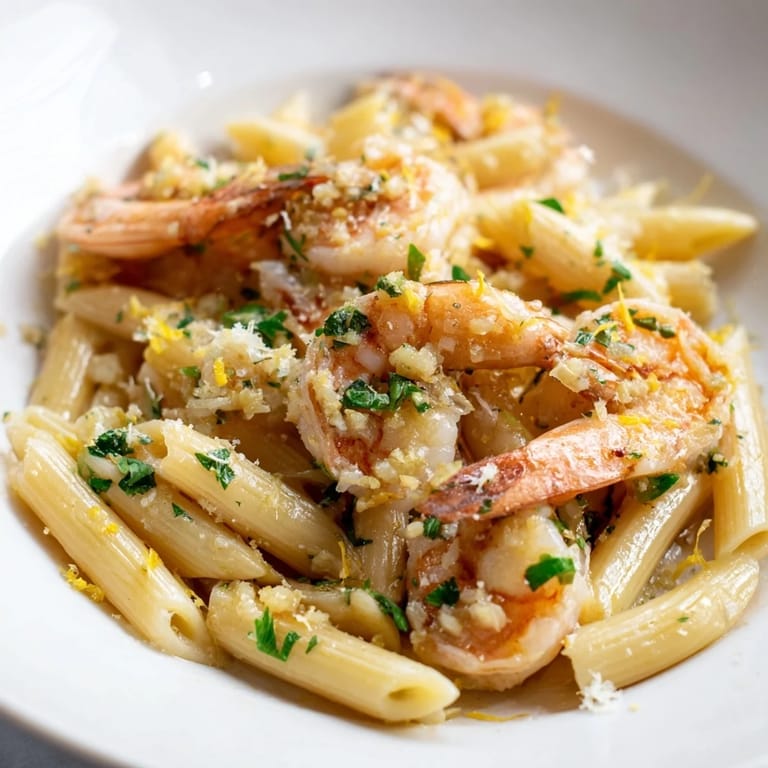
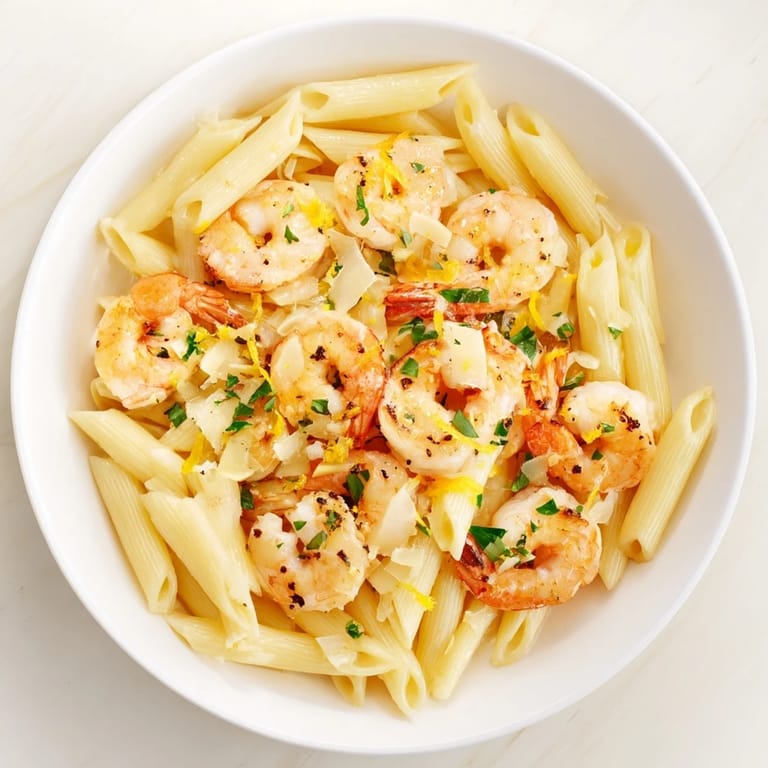
Save There's a Tuesday night energy to garlic shrimp penne that never gets old. I discovered this dish by accident when I had a handful of shrimp left from dinner the night before and was staring at a box of penne, thinking I'd thrown together something forgettable. But the moment those pink shrimp hit the hot butter and garlic, the kitchen filled with this intoxicating aroma that made my roommate come running from the living room asking what I was making. Twenty minutes later, we were twirling perfectly al dente pasta around our forks, butter dripping down our chins, wondering why we hadn't made this a weekly ritual sooner.
I made this for someone I was trying to impress, and I remember standing at the stove feeling nervous, then suddenly confident the moment I saw how the shrimp transformed from translucent to that perfect opaque pink. Watching them enjoy it quietly, just savoring each bite, told me everything I needed to know. It became our go-to date night meal because it felt special without being fussy.
Ingredients
- Large shrimp (400 g): Pat them completely dry before cooking—any moisture will cause them to steam instead of sear, and you'll miss out on that golden crust.
- Penne pasta (350 g): Cook it a minute or two under al dente because it'll continue softening when tossed with the hot butter sauce.
- Garlic (4 cloves): Mince it finely so it distributes throughout the butter evenly and toasts rather than burns.
- Shallot (1 small): Its subtle sweetness balances the bright lemon and pungent garlic better than onion would.
- Fresh parsley (2 tbsp): Add it at the very end so the heat doesn't turn it dark and bitter.
- Lemon zest and juice: The zest gives you those tiny bursts of bright oil, while the juice adds acidity that makes everything taste fresher.
- Unsalted butter (60 g): Using unsalted lets you control the salt level and means the butter flavor stays pure and sweet.
- Parmesan cheese (2 tbsp): Freshly grated melts into the sauce more smoothly than pre-grated, which contains anti-caking agents.
- Extra-virgin olive oil (2 tbsp): Use this for the initial sear; the shrimp need the higher smoke point.
- Salt, pepper, and red pepper flakes: Red pepper flakes add just enough heat to make you notice the garlic more intensely.
Tired of Takeout? 🥡
Get 10 meals you can make faster than delivery arrives. Seriously.
One email. No spam. Unsubscribe anytime.
Instructions
- Boil the pasta water:
- Get your salted water to a rolling boil before the penne goes in; it should taste like the sea so the pasta seasons itself from the outside in. This is the only chance to season the pasta itself.
- Cook the penne:
- Follow the package time but pull it out a minute early—you're building a sauce that will help finish the cooking. Save that pasta water like it's liquid gold; it's the secret to binding everything together.
- Prep the shrimp:
- Paper towels are your best friend here; any surface moisture prevents browning and makes the shrimp rubbery. Season gently with just salt and pepper so you taste the shrimp, not the seasoning.
- Sear the shrimp:
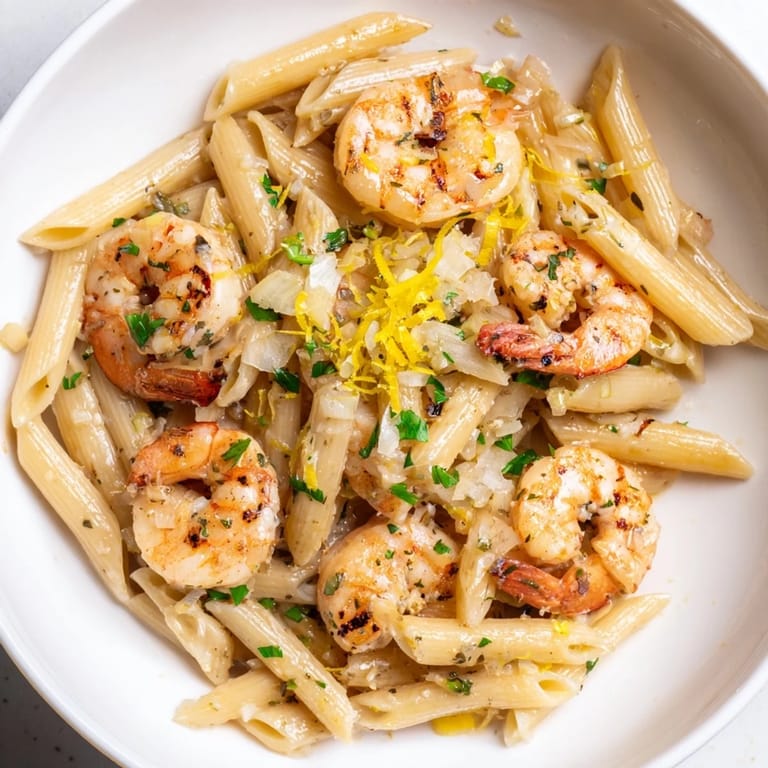
- Get the skillet screaming hot, then lay the shrimp down in a single layer without moving them for at least a minute—this is how you get that light golden kiss. Flip once, cook another minute, then move them to a plate the moment they turn opaque; they'll keep cooking from residual heat.
- Build the garlic butter base:
- Cook the shallot until it's soft and just starting to smell sweet, then add garlic and listen for that gentle sizzle. You want the garlic fragrant but not brown; brown means bitter, and bitter ruins everything.
- Add the brightness:
- Red pepper flakes, lemon zest, and lemon juice go in together and should make your kitchen smell like a lemon grove crossed with a pizzeria. The zest oils will release into the fat and carry all that citrus flavor throughout.
- Toss the pasta:
- Add the drained pasta directly to the skillet and start tossing immediately—the residual heat will toast it slightly and help the butter emulsify. Add pasta water a splash at a time until the whole thing looks glossy and loose, not dry and clumpy.
- Bring it home:
- Return the shrimp, add parsley and Parmesan, then taste and season once more. The starch from the pasta water helps the cheese melt into a velvety coating instead of clumping.
- Serve right now:
- This dish doesn't wait—plate it immediately while the butter is still silky and the shrimp still warm.
 Save
Save There's something quietly magical about finishing a dish by tossing it together in a single skillet, watching all the separate elements suddenly become one silky, shimmering whole. It's the moment I understood that the best meals aren't complicated—they're just built on respect for each ingredient and timing you feel in your bones instead of reading off a clock.
The Shrimp: Choosing and Handling Them Right
The size and quality of your shrimp will make or break this dish. Large shrimp stay tender and cook evenly, while smaller ones can overcook in a heartbeat. I learned this the expensive way by buying the smallest shrimp I could find, thinking I was being clever, and ending up with a skillet full of shrimp marbles. Look for shrimp that are firm, smell like the ocean rather than ammonia, and have that slightly translucent look before cooking. If you can't find fresh, frozen shrimp that you thaw yourself are actually better than what sits in the grocery store case for days—just give them time in the fridge to defrost slowly so they don't get watery.
Pasta Water: Your Secret Weapon
The starchy water clinging to pasta becomes a legitimate sauce when you use it right, and it's the difference between something that tastes homemade and something that tastes like you actually know what you're doing. I used to dump it without thinking, and my sauces would break or look thin and oily—then a chef friend watched me cook and just silently held out a measuring cup at the colander, and suddenly my entire relationship with pasta changed. Start with a quarter cup and add more as you go; you want the pasta to look like it's swimming in something silky, not sitting in a puddle.
Variations and Moments of Play
The beauty of this dish is that it's a framework, not a prison. I've added a splash of dry white wine when I wanted something a bit more elegant, or a pinch of crushed red pepper flakes when I was cooking for someone who liked heat. Sometimes I toss in a handful of fresh spinach at the end, and once I added caramelized garlic instead of raw because I had it on hand and wanted something richer. The core—shrimp, pasta, garlic, butter, lemon—stays steady, but everything else can shift depending on your mood, your pantry, or who you're cooking for.
- Try a splash of cream if you want a richer sauce, though it mutes the bright lemon note slightly.
- Substitute linguine or spaghetti if you want something that feels more delicate than penne.
- A crisp Sauvignon Blanc or Pinot Grigio pairs beautifully, both to drink and to cook with if you want to add a splash to the pan.
 Save
Save This is the kind of dish that makes a Tuesday feel like Friday, the kind that proves you don't need hours in the kitchen or a long ingredient list to cook something that tastes like care. It's fast enough for a weeknight but elegant enough to set down in front of someone and feel like you tried.
Recipe FAQs
- → How do I ensure shrimp stays tender?
Cook shrimp over medium-high heat briefly until just pink and opaque to avoid toughness.
- → Can I substitute the pasta type?
Yes, linguine or spaghetti work well as alternatives to penne in this dish.
- → What adds brightness to the sauce?
Lemon zest and lemon juice provide a fresh, vibrant contrast to the rich garlic butter.
- → How can I thicken the sauce if needed?
Adding reserved pasta water gradually helps create a silky sauce that clings to the pasta.
- → Is it possible to make this dish gluten-free?
Yes, swap regular penne for gluten-free pasta to accommodate dietary needs.