 Save
Save The first time I made harissa chickpea pasta, I was trying to use up a half-empty jar of harissa that had been lurking in my fridge for months. I'd bought it on a whim at the market, intrigued by the reddish paste and the promise of North African heat, but hadn't known what to do with it. That evening, with just pasta, canned chickpeas, and tomatoes on hand, something clicked—the spice bloomed into something so vibrant and alive that I found myself making it again the very next week.
I remember serving this to my friend Maya, who claimed she didn't like spicy food, only to watch her go back for thirds and ask for the recipe before she even finished her plate. She still makes it, and now she doubles the harissa. That moment taught me something about how the right balance of heat and acidity can surprise people, how a dish can change minds.
Ingredients
- Dried short pasta (penne, rigatoni, or fusilli): 350 g (12 oz)—the shape matters because it catches the sauce in all its nooks and crannies.
- Olive oil: 2 tbsp—use something you actually like tasting, not the cheapest bottle.
- Medium onion: 1, finely chopped—this becomes the sweet foundation that balances the harissa's heat.
- Garlic cloves: 3, minced—fresh garlic only; the powdered kind will betray you here.
- Harissa paste: 2 tbsp—this is where the personality lives; adjust it according to your courage.
- Ground cumin: 1 tsp—it deepens the warmth without announcing itself.
- Smoked paprika: 1/2 tsp—adds a whisper of smokiness that makes people ask what your secret is.
- Canned diced tomatoes: 1 (400 g / 14 oz) can—canned is better than fresh here because the tomatoes have already broken down into sauce.
- Canned chickpeas: 2 (400 g / 14 oz) cans, drained and rinsed—rinsing matters; it removes the starchy liquid that would muddy the sauce.
- Vegetable broth or water: 1/2 cup (120 ml)—use broth if you have it, but water works just fine.
- Salt and freshly ground black pepper: to taste—taste as you go; seasoning is a conversation, not a prescription.
- Lemon: 1—zest and juice at the end brighten everything and make the spice sing.
- Fresh parsley or cilantro: 2 tbsp, chopped—the final flourish that makes it feel intentional.
- Crumbled feta cheese: optional, to serve—a creamy contrast if you want it.
Tired of Takeout? 🥡
Get 10 meals you can make faster than delivery arrives. Seriously.
One email. No spam. Unsubscribe anytime.
Instructions
- Get the pasta going:
- Bring a large pot of salted water to a boil—the water should taste like the sea. Cook the pasta according to package instructions until it's al dente, still with a tiny bit of resistance when you bite it. Before you drain it, scoop out about 1/2 cup of that starchy water and set it aside; you'll need it later to loosen the sauce.
- Build the base:
- While the pasta cooks, heat olive oil in a large skillet over medium heat. Add the chopped onion and let it soften for 4–5 minutes, stirring occasionally, until it turns translucent and sweet.
- Wake up the spices:
- Add the minced garlic, harissa paste, cumin, and smoked paprika to the pan. Stir constantly for about 1 minute—you'll smell the spices opening up, and that aroma is your signal that they're ready.
- Build the sauce:
- Pour in the diced tomatoes, add the drained chickpeas and vegetable broth, then stir everything together. Season with salt and pepper, then bring it all to a simmer.
- Let it meld:
- Cover the skillet and let it cook for 10–12 minutes, stirring now and then. The sauce will thicken, the flavors will marry together, and the chickpeas will soften slightly, soaking in all that spiced tomato goodness.
- Bring it together:
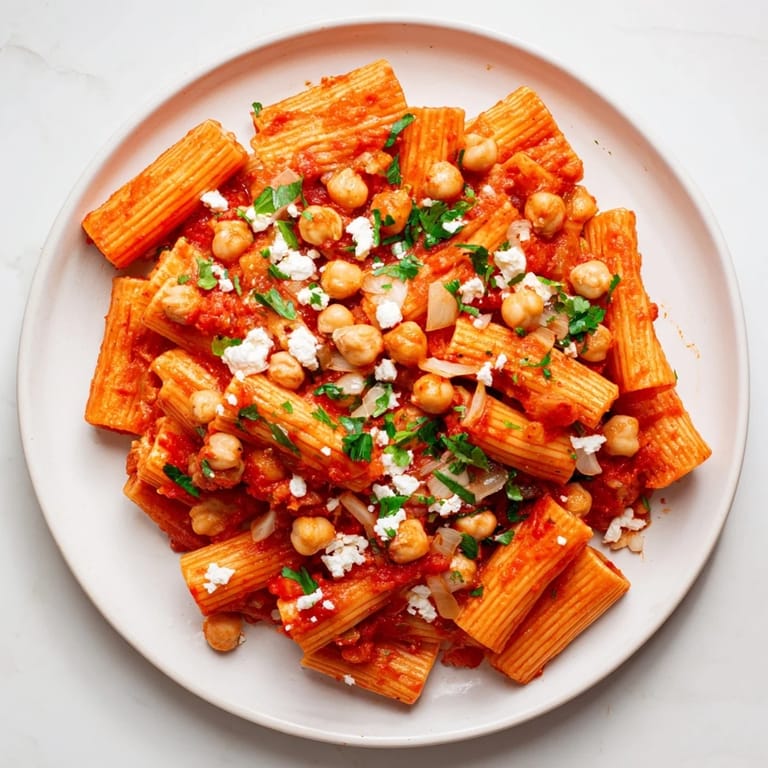
- Add the cooked pasta to the skillet, tossing everything so every strand gets coated in that red, fragrant sauce. If it looks too thick, splash in some of that reserved pasta water until it reaches the consistency you like—it should be saucy but not soupy.
- Finish with brightness:
- Remove from heat and stir in the lemon zest, lemon juice, and fresh herbs. Taste it—adjust the salt, pepper, or harissa if it needs it. This is your moment to make it exactly right.
- Serve and celebrate:
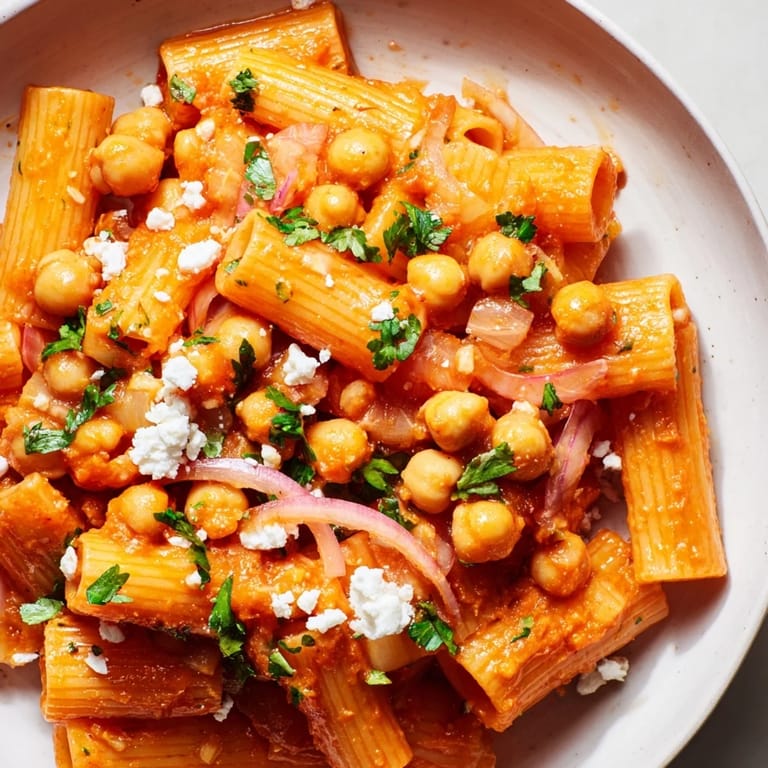
- Divide among bowls and scatter more herbs on top. If you're using feta, crumble it over generously. The contrast of cool, salty cheese against the warm, spiced pasta is the moment everything comes together.
 Save
Save There's a moment, right after you stir in the lemon juice and herbs, when the dish transforms. The steam rises, carrying all those warmth and green notes, and suddenly it doesn't feel like you just threw together pantry staples—it feels like you've made something that matters. That's when I know I've got dinner right.
The Harissa Question
Harissa is a North African chili paste that's become my favorite secret weapon for turning everyday ingredients into something with real personality. It's not just heat; there's complexity in it, an earthiness that comes from toasted spices and dried chiles. If you can't find it in your regular supermarket, check the international aisle or order it online—once you have a jar, you'll find yourself using it in everything from eggs to roasted vegetables. The first time you open a new jar, the smell might be intense; that's how you know it's working.
When to Deviate
This recipe is a framework, not a cage. White beans work beautifully in place of chickpeas if that's what you have, and the pasta shape is flexible too—any short pasta that can hold sauce is your friend. I've added roasted red peppers, spinach, zucchini; each addition changes the mood without breaking the spell. One night I stirred in a handful of spinach in the last minute, and suddenly it felt like spring. The point isn't to follow instructions rigidly; it's to understand the logic so you can make it your own.
Serving and Pairing
This pasta works as a solo meal, filling and nourishing on its own, but it also loves company. A crisp white wine—something with acidity like Sauvignon Blanc or Vermentino—cuts through the richness and echoes the lemon. A chilled rosé works too, especially on warmer nights. If you want something to round out dinner, a simple green salad with sharp vinaigrette, some crusty bread to soak up every last drop of sauce, or just a wedge of lemon to squeeze over everything again.
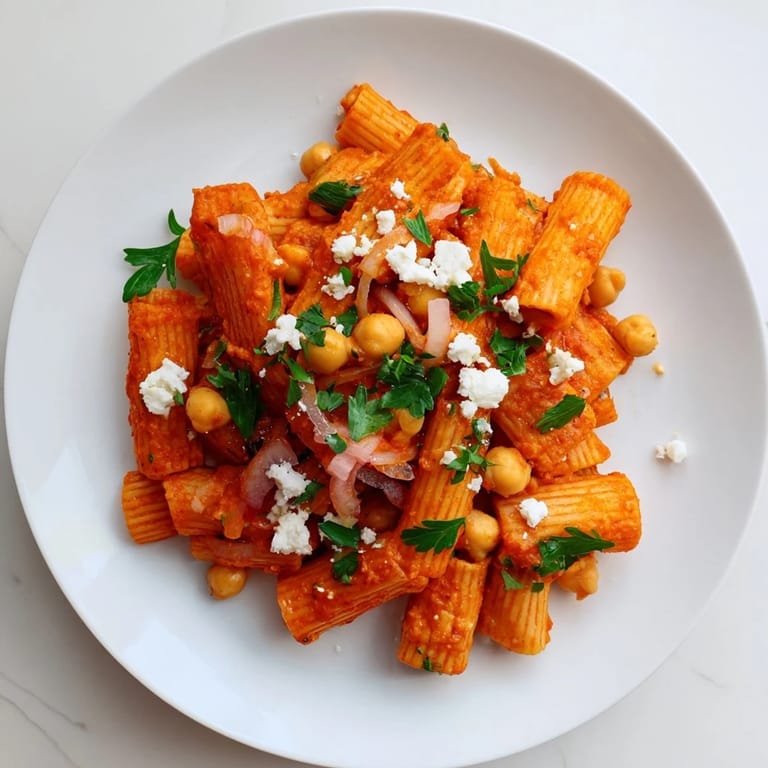
- Crumbled feta or ricotta salata adds a salty, creamy contrast that turns this into something even more special.
- Extra fresh herbs scattered on top right before serving keep everything bright and alive.
- If you make a double batch, this reheats beautifully the next day, the flavors even more integrated.
 Save
Save This dish has become the one I make when I want to feel like I've cooked something worth making, but I don't have the time or energy for anything complicated. It's proof that simple can still be spectacular.
Recipe FAQs
- → How do I adjust the spice level in this dish?
You can increase or decrease harissa paste according to your heat preference. Adding chili flakes adds extra kick without altering flavor much.
- → Can I use different types of pasta?
Yes, short pasta shapes like penne, rigatoni, or fusilli work well to hold the sauce and provide good texture.
- → Is it possible to make this dish dairy-free?
Absolutely. Simply omit the optional crumbled feta, and the dish remains flavorful and satisfying.
- → What can I substitute for chickpeas?
White beans or even roasted vegetables can be used instead for variation, keeping the texture hearty.
- → How do I prevent the sauce from becoming too thick or dry?
Reserve some pasta cooking water to add back when tossing the pasta and sauce together; it helps loosen and bind the flavors nicely.