 Save
Save I discovered tikka salmon almost by accident one Tuesday evening when I had salmon defrosting and a half-used jar of tikka paste sitting in my fridge. Rather than reaching for my usual lemon and dill routine, I decided to mix the paste with yogurt and see what happened. Twenty minutes later, the kitchen smelled like a Delhi street market, and I realized I'd stumbled onto something that would become a weeknight staple. The combination of warm spices with the richness of the fish was unexpectedly perfect, and I've been making it ever since.
I made this for my neighbor Sarah one Friday when she mentioned offhandedly that she missed Indian food but didn't trust restaurant orders anymore. She sat at my kitchen counter while the salmon roasted, and the moment she took that first bite, her whole face changed. She kept saying it tasted like the tikka she had in Mumbai years ago, and asked for the recipe before she even finished eating. That moment taught me that sometimes the simplest dishes are the ones that mean the most.
Ingredients
- Salmon fillets (4, about 150g each): Look for fillets that are firm and smell fresh like the ocean, not fishy. Pat them completely dry before marinating, as moisture is the enemy of that beautiful crispy exterior.
- Thick plain yogurt (3 tbsp): The thickness is key here—it clings to the fish better than thin yogurt and creates a protective coating as it roasts. Use full-fat if you can; it makes a difference.
- Tikka masala paste (2 tbsp): This is where the flavor party happens. Buy a good quality brand or make your own if you're feeling ambitious; the paste is the star.
- Lemon juice (1 tbsp): Adds brightness that cuts through the richness of the spices and the salmon's natural oils.
- Ground cumin (1 tsp): Warm and earthy, this spice is the backbone of your marinade.
- Ground coriander (1 tsp): Slightly citrusy and floral, it balances the heat from the chili and paprika.
- Smoked paprika (½ tsp): Adds a subtle depth without overpowering the other spices.
- Chili powder (½ tsp): Adjust this based on how much heat you enjoy; I've learned the hard way that some guests have different thresholds.
- Olive oil (1 tbsp): Helps the marinade adhere and promotes even browning in the oven.
- Salt and black pepper: Don't skip these—they make every other flavor sing.
- Lemon wedges, fresh coriander, and sliced red onion to serve: These garnishes aren't just decoration; they add texture, freshness, and a brightness that rounds out the rich, spiced salmon.
Tired of Takeout? 🥡
Get 10 meals you can make faster than delivery arrives. Seriously.
One email. No spam. Unsubscribe anytime.
Instructions
- Get your oven ready and prep your workspace:
- Preheat the oven to 220°C (425°F) and line your baking tray with parchment paper or foil. This prevents sticking and makes cleanup a breeze.
- Build your marinade:
- In a bowl, combine the yogurt, tikka paste, lemon juice, cumin, coriander, paprika, chili powder, olive oil, salt, and pepper. Stir until the mixture is smooth and well blended—no streaks of paste hiding in corners.
- Dry your salmon thoroughly:
- Pat each fillet with paper towels until they're really dry. This step is non-negotiable if you want that crispy exterior.
- Coat the salmon generously:
- Slather each fillet with the spiced yogurt mixture, making sure every surface is covered. Use your hands if you have to; it helps you feel when the coating is even.
- Let it sit and develop flavor:
- Leave the salmon on the tray for at least 10 minutes while the flavors meld. If you have time and fridge space, let it marinate for up to an hour—the deeper the flavor, the better.
- Roast until just cooked through:
- Place the tray in the hot oven for 15 to 18 minutes, keeping an eye on the salmon in the last few minutes. It's done when the flesh flakes gently with a fork and the edges are golden and slightly crisp.
- Finish and serve:
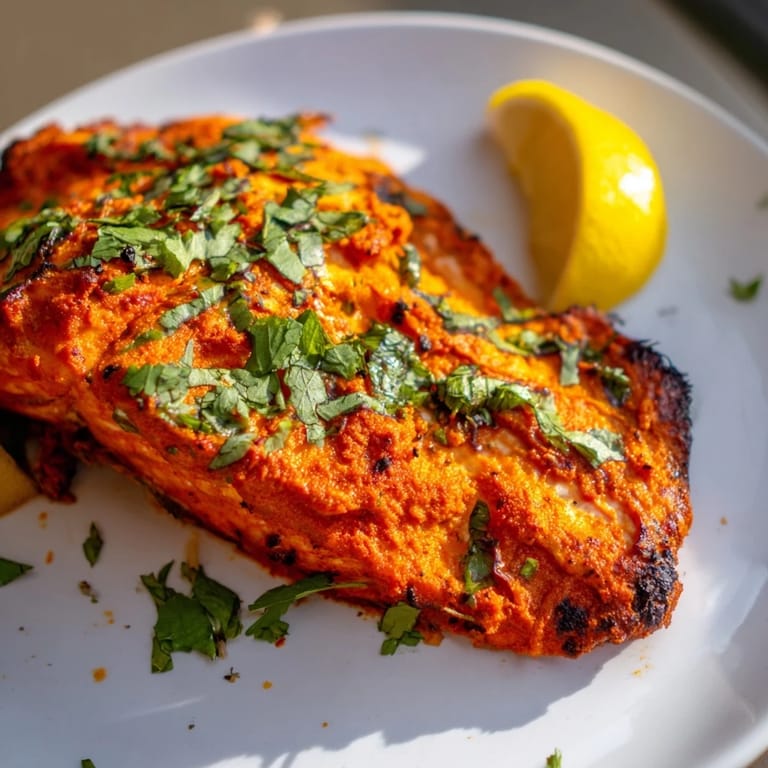
- Transfer to plates while still warm, scatter fresh coriander over the top, and serve with lemon wedges to squeeze over. The heat should still be lingering in the pan—that's when it's perfect.
 Save
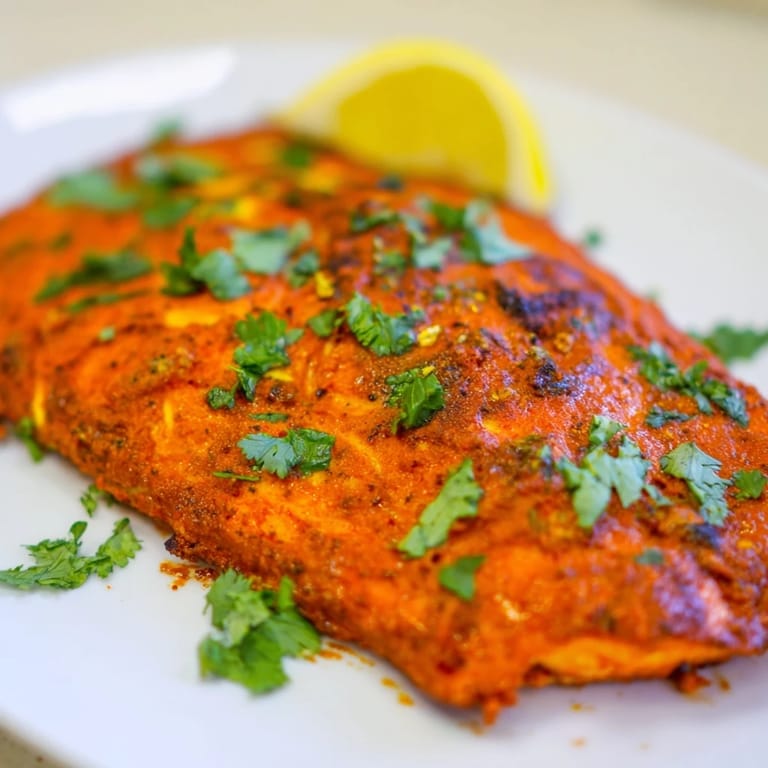
Save There's something about serving this dish that feels like sharing a small piece of something special. The combination of warm spices, flaky fish, and bright garnishes creates a meal that tastes indulgent but never feels heavy. It's become my go-to when I want to cook something that impresses without the stress.
Why This Marinade Works
The yogurt in this marinade does two important jobs: it tenderizes the salmon while also creating a protective layer that keeps the fish moist inside while the edges crisp up in the heat. The tikka paste provides all the complex spice work—cumin, coriander, and chili—so you're not juggling a dozen jars. Adding lemon juice to the yogurt helps it cling better and adds brightness that will cut through the richness of the salmon's natural oils. I've tried this with Greek yogurt, coconut yogurt, and even cashew cream, and each version brings its own subtle character to the final dish.
Serving Suggestions That Actually Work
I typically serve this with basmati rice cooked in a bit of ghee and scattered with toasted cumin seeds, or alongside soft naan that you can use to scoop up the spiced yogurt that pools on the plate. A simple cucumber and tomato salad with a squeeze of lime brings cooling contrast to the warm spices. One unexpected winner was serving it over a bed of crispy roasted vegetables—the heat from the salmon and the caramelized edges of the vegetables created a combination that felt both restaurant-quality and completely approachable. Sometimes I've added a dollop of cooling yogurt sauce on the side for people who want to dial down the heat.
Adapting This Recipe for Different Preferences
The beauty of this dish is how flexible it is without losing its character. I've made it with cod and haddock for guests who don't eat salmon, and the slightly firmer flesh of those fish actually holds the marinade beautifully and creates an even crispier crust. For vegetarians, thick slices of tofu pressed dry and roasted the same way develop a golden exterior while staying creamy inside. You can dial the heat up or down by adjusting the chili powder—start with a quarter teaspoon if you're unsure and add more next time based on how it felt. If dairy isn't an option, plant-based yogurts work just as well, though I recommend avoiding the flavored ones and sticking with plain.
- Check your tikka paste for allergens before serving to guests, as some brands add nuts or mustard.
- Keep the marinade ingredients at room temperature so they coat the cold salmon evenly.
- Leftover roasted salmon (if you somehow have any) makes incredible flaked fish for salads the next day.
 Save
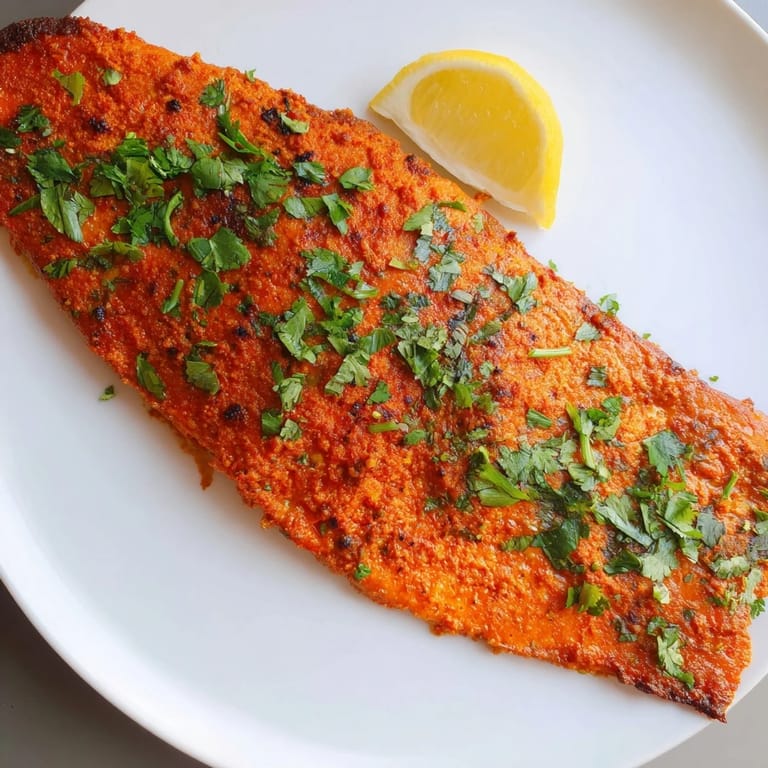
Save This recipe has become my answer to the question, 'What should I cook tonight when I want something that tastes special but won't keep me in the kitchen all evening.' It's reliable, forgiving, and genuinely delicious every single time.
Recipe FAQs
- → What is the best way to marinate the salmon?
Mix yogurt, tikka masala paste, lemon juice, and spices thoroughly, then coat the salmon evenly. Let it rest for at least 10 minutes to absorb the flavors.
- → How should the salmon be cooked for ideal texture?
Roast the fillets in a preheated oven at 220°C (425°F) for 15–18 minutes until the edges are slightly crisp and the fillet is tender inside.
- → Can I adjust the spiciness of this dish?
Yes, modify the chili powder amount in the marinade to suit your preferred heat level without affecting the overall balance.
- → What are suitable side dishes to accompany these salmon fillets?
Serve with basmati rice, naan, or a light cucumber salad to complement the robust flavors of the spices.
- → Are there alternatives to salmon for this preparation?
Cod, haddock, or firm tofu can be used as substitutes, maintaining the marinade and cooking method for similar results.