 Save
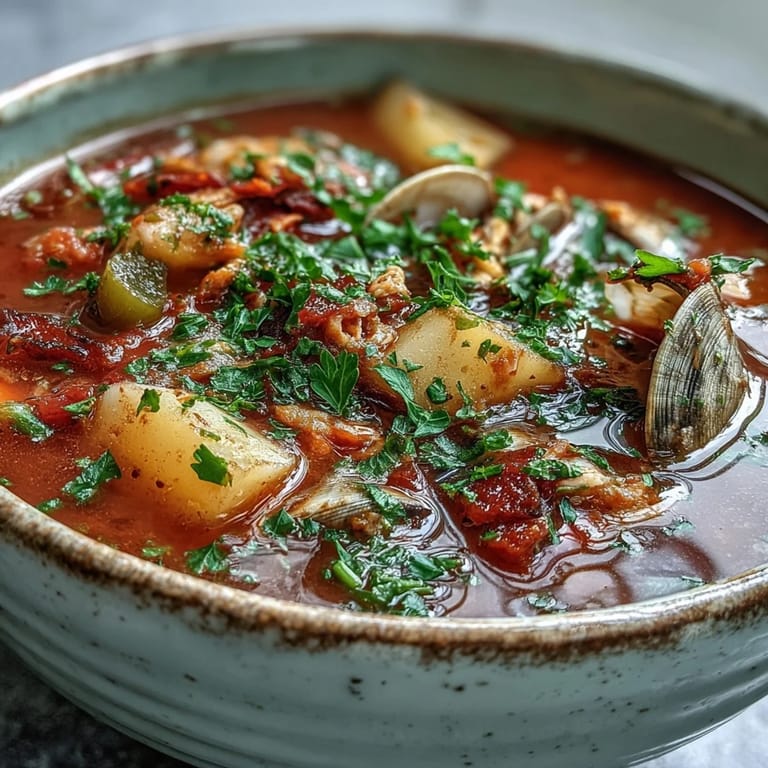
Save There's something utterly transportive about a steaming bowl of Manhattan Clam Chowder that always carries me back to foggy mornings along the Atlantic coast. I first encountered this vibrant red version of chowder at a weathered seafood shack in Rhode Island, where the tomato-based broth was such a revelation compared to the creamy New England style I'd grown up with. The way the briny clam flavor married with the acidic tomatoes created this perfect balance that spoke of seaside summers even in the dead of winter.
Last autumn, I made a huge pot of this chowder for a backyard gathering with friends who had just moved from the Midwest and had never experienced real East Coast seafood. The look on Davids face when he took his first spoonful - that moment of surprise followed by pure contentment - made all the chopping and simmering worthwhile. Everyone huddled around the firepit with their bowls, the steam rising into the cool evening air, creating this perfect moment of connection through food.
Ingredients
- Fresh clams: The soul of the chowder, providing that unmistakable oceanic essence that grounds the entire dish - Ive found that a mix of littlenecks and cherrystones gives the most complex flavor.
- Yukon gold potatoes: Their waxy texture holds up beautifully in soups without dissolving into mush, and their buttery flavor adds richness without dairy.
- Green bell pepper: This is actually the signature ingredient that distinguishes Manhattan style from other chowders, adding a garden-fresh counterpoint to the briny clams.
- Crushed red pepper flakes: Just a pinch transforms this from homey comfort food to something with a gentle, warming kick that opens up all the flavors.
- Clam juice: If youre using fresh clams, never discard that precious steaming liquid - it contains concentrated umami that no store-bought broth can match.
Tired of Takeout? 🥡
Get 10 meals you can make faster than delivery arrives. Seriously.
One email. No spam. Unsubscribe anytime.
Instructions
- Prepare the clams:
- If using fresh clams, give them a good scrub under cold running water to remove any grit or sand clinging to the shells. Place them in a large pot with just enough water to create steam, cover with a tight-fitting lid, and watch closely as they open their shells like tiny treasures revealing themselves.
- Build the flavor base:
- Heat olive oil in your heaviest pot until it shimmers, then add the aromatic trinity of onion, celery and carrots. The kitchen will fill with that nostalgic soup-making fragrance as you stir occasionally, watching the vegetables soften and release their flavors.
- Add the aromatics:
- When the vegetables have softened, toss in the minced garlic and stir continuously for just a minute. Youll smell the exact moment when the garlic blooms in the hot oil - thats your cue to move to the next step before it burns.
- Simmer the soup base:
- This is where the magic happens as you combine potatoes, tomatoes, herbs, and all those beautiful liquids. The broth will gradually take on a rich, ruddy color as it bubbles gently, with the potatoes slowly softening and absorbing all those wonderful flavors.
- Finish with clams:
- Add the chopped clams last since theyre already cooked and need just enough time to warm through. This preserves their delicate texture and prevents them from becoming tough little rubber bands floating in your beautiful soup.
 Save
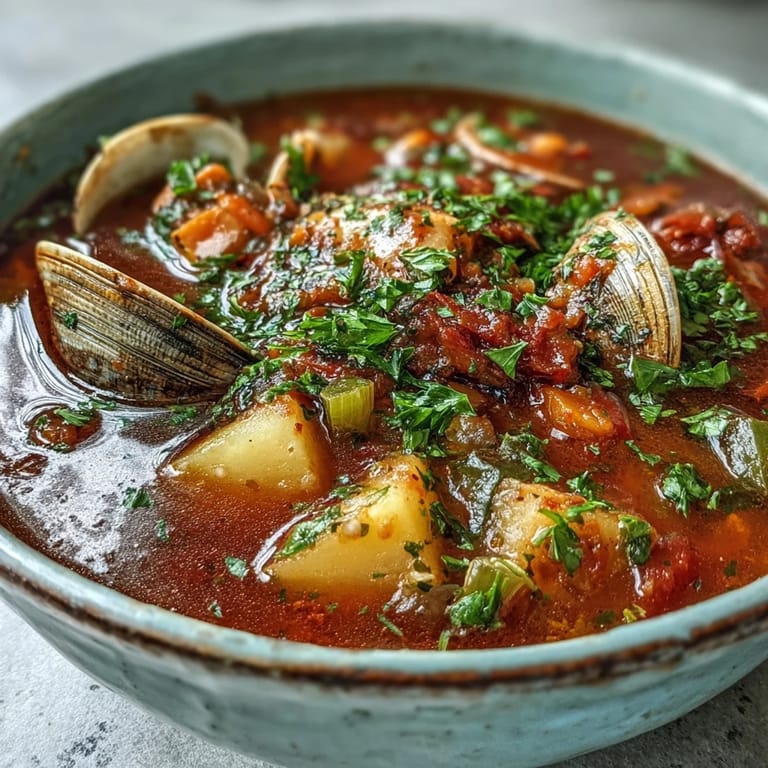
Save My most cherished memory of this chowder comes from a particularly difficult winter when my mother was ill. Unable to eat much, she surprised us all by requesting a bowl of my Manhattan clam chowder after weeks of barely touching food. Watching her savor each spoonful, color returning to her cheeks with each bite, I understood how food can be so much more than sustenance. That bowl of soup became a turning point in her recovery, a moment when we all began to hope again.
Storage and Make-Ahead Tips
Ive learned through many batches that this chowder develops even deeper flavors after a night in the refrigerator. The tomatoes mellow, the herbs infuse more thoroughly, and everything harmonizes in a way that transcends the sum of its parts. Just be sure to reheat gently over medium-low heat, stirring occasionally to prevent the potatoes from breaking down too much or the bottom from scorching.
Serving Suggestions
Theres something about the ritual of serving this chowder that enhances the experience. I like to ladle it into wide, shallow bowls rather than deep ones - it cools more quickly to an edible temperature and showcases all those beautiful chunks of vegetables and clams. A handful of oyster crackers scattered on top provides the perfect textural contrast as they slowly soften in the broth, and a cold beer or crisp white wine alongside completes what I consider one of lifes simple perfect meals.
Variations to Try
Over the years, Ive played with this recipe depending on whats available and who Im feeding. Sometimes the best versions come from necessary adaptations rather than planned experimentation.
- For a smoky depth, render 2-3 strips of diced bacon as your first step, then use that flavorful fat to sauté your vegetables instead of olive oil.
- When fresh herbs are abundant in summer, swap the dried thyme and oregano for double the amount of fresh, adding them in the last few minutes of cooking instead.
- For a gluten-free thickening option, mash a portion of the cooked potatoes against the side of the pot with your wooden spoon - they release their starch and create a naturally thicker broth without any flour.
 Save
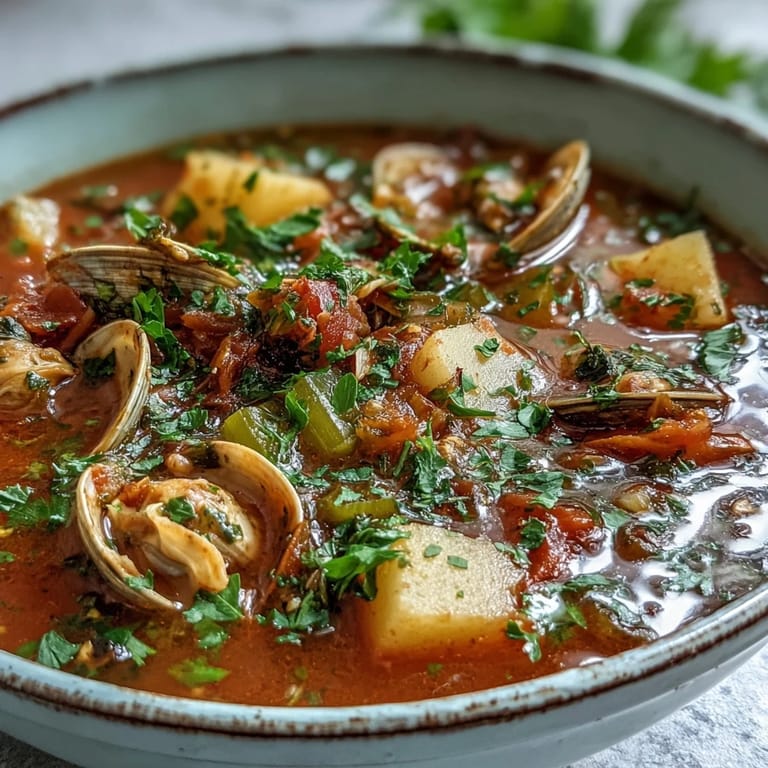
Save This Manhattan Clam Chowder has been my faithful companion through countless gatherings, quiet family dinners, and solo meals eaten straight from the pot. With each batch I make, Im reminded that sometimes the simplest foods carry the deepest memories.
Recipe FAQs
- → What makes Manhattan clam chowder different from New England style?
Manhattan clam chowder uses a clear tomato-based broth instead of the creamy milk or cream base found in New England versions. This gives it a lighter texture and a vibrant red color. The tomato base also provides a slightly acidic, zesty flavor profile that contrasts with the rich, creamy characteristics of traditional New England chowder.
- → Can I use canned clams instead of fresh?
Yes, canned chopped clams work well in this chowder. Use 3 cups of canned clams, drained, and reserve the juice to supplement the clam broth. Fresh clams require steaming and shelling, which adds about 15 minutes of preparation time. Both versions yield delicious results, though fresh clams provide a slightly sweeter, more delicate flavor.
- → How long does this chowder keep in the refrigerator?
Properly stored in an airtight container, Manhattan clam chowder will keep for 3-4 days in the refrigerator. The flavors often improve after a day as the ingredients meld together. Reheat gently over medium-low heat, stirring occasionally to prevent scorching. Avoid boiling, which can toughen the clams.
- → Can I freeze Manhattan clam chowder?
This chowder freezes well for up to 3 months. However, the potatoes may become slightly grainy upon thawing. For best results, cool completely before transferring to freezer-safe containers. Thaw overnight in the refrigerator and reheat gently. You may need to add a splash of water or broth when reheating to adjust consistency.
- → What type of potatoes work best in this chowder?
Yukon Gold potatoes are ideal because they hold their shape well during simmering while becoming tender. Their naturally creamy texture adds body to the broth. Red potatoes are another good option. Avoid russets, as they can become mealy and break down too much in the liquid.
- → How can I make this chowder spicier?
Increase the crushed red pepper flakes to 1 teaspoon for noticeable heat, or add diced jalapeño peppers when sautéing the vegetables. You can also serve with hot sauce on the table. The recipe as written includes a mild kick from the optional red pepper flakes, which provides warmth without overwhelming the clam flavor.