 Save
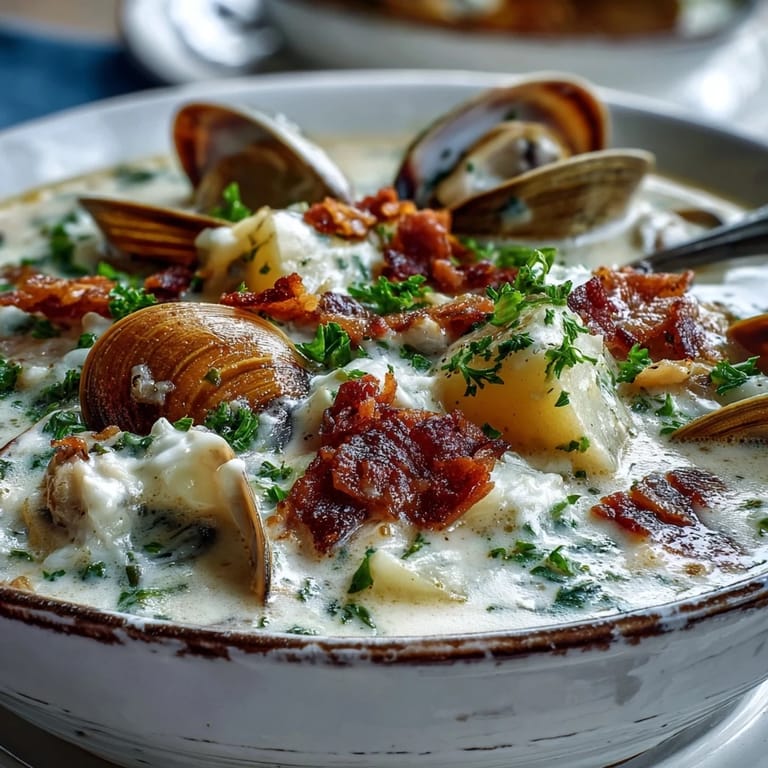
Save The salt-sprayed morning I first tasted authentic New England Clam Chowder changed my relationship with soup forever. Perched on a weathered dock in Maine, watching fishing boats return with their catch, I spooned that velvety broth brimming with tender clams and potato chunks. The contrast between the ocean breeze and the warm, creamy comfort in my bowl was magical. Years later, I've perfected my own version that transports me back to that wooden pier with every steaming ladle.
Last winter during that unexpected snowstorm, I made this chowder when our neighbors lost power. We crowded around my kitchen table by candlelight, steam rising from our bowls, telling stories while the wind howled outside. Someone mentioned their grandmother used to add a splash of sherry to her chowder, which I tried next time and loved. Kitchen conversations like these keep recipes evolving, connecting us across generations through something as simple as soup.
Ingredients
- Fresh Clams: The star of the show, providing that distinctive oceanic flavor that makes this soup special, though canned work beautifully when fresh arent available.
- Salt Pork or Bacon: This traditional ingredient provides the savory foundation that supports everything else, rendering beautiful fat that carries flavor throughout the entire pot.
- Yukon Gold Potatoes: After experimenting with every variety, Ive found these hold their shape while still breaking down slightly to add body to the broth.
- Heavy Cream: The silky backbone of any proper New England chowder, creating that signature richness without overwhelming the delicate clam flavor.
- Bay Leaf: Just one adds a subtle aromatic complexity that you wouldnt be able to identify but would definitely miss if it wasnt there.
Tired of Takeout? 🥡
Get 10 meals you can make faster than delivery arrives. Seriously.
One email. No spam. Unsubscribe anytime.
Instructions
- Prepare Your Clams:
- If using fresh clams, give them a good scrub under cold water to remove any grit, then steam until their shells open wide, revealing their treasure. The liquid they release is pure gold, so strain and save every drop.
- Build Your Flavor Base:
- When the salt pork begins to crisp and render in the pot, youll smell that magical aroma that signals youre on the right track. The rendered fat coats the pot with an invisible layer of flavor that will infuse everything to come.
- Create Your Roux:
- Sprinkling flour over the sauteed vegetables might seem simple, but watch how it transforms from dusty coating to smooth paste as it cooks. This two-minute step determines whether your chowder will be silky or lumpy.
- Add Liquids Gradually:
- Pour in your liquids slowly while whisking, feeling the resistance against your whisk gradually give way to smooth, velvety texture. This patience prevents the dreaded lumpy chowder syndrome that plagues hasty cooks.
- Simmer With Care:
- As potatoes cook, your kitchen will fill with a comforting aroma that draws people in asking whats for dinner. Stir occasionally, watching the broth thicken just enough to coat the back of your spoon.
- Finish With Tenderness:
- Add those precious clams at the end, letting them warm through without toughening. The chowder will transform before your eyes into something greater than the sum of its parts.
 Save
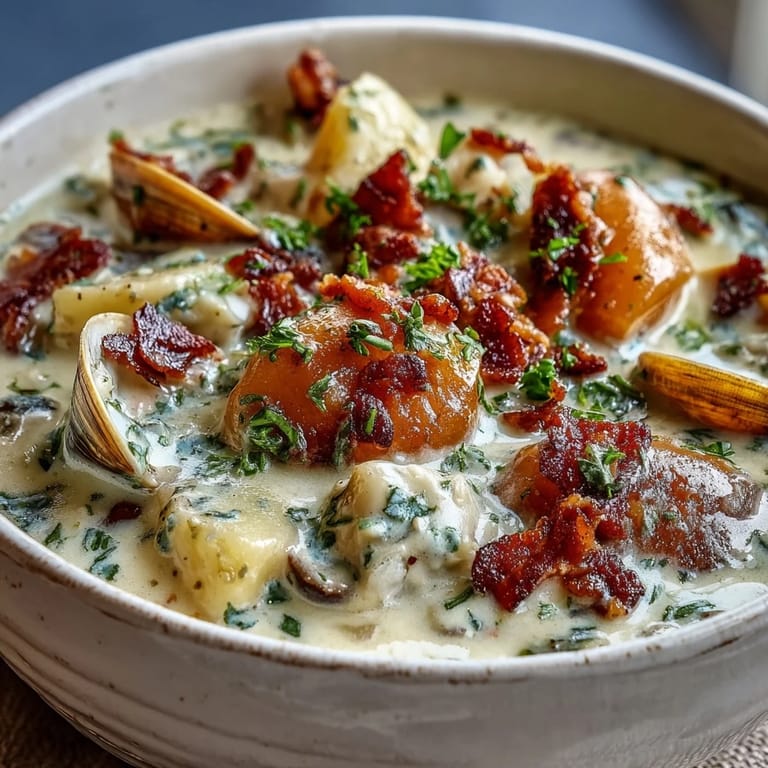
Save The first time I served this chowder at our annual holiday gathering, my brother-in-law who normally pushes seafood around his plate asked for seconds, then the recipe. Watching someone discover a new love for something youve prepared brings a satisfaction that goes beyond the cooking itself. Now its become our tradition before we exchange gifts, fueling conversation and warming spirits as we catch up on each others lives.
Finding Your Perfect Consistency
New England chowder traditions spark passionate debates about thickness. Some swear by a chowder you can stand a spoon in, while others prefer something that flows gently from the ladle. Ive found the sweet spot lies somewhere in between, where the broth clings lightly to the spoon but still moves with a silky grace when you tilt your bowl. If yours thickens too much while sitting, simply thin with a splash of warm milk, stirring gently to maintain that precious consistency.
The Fresh vs. Canned Clam Dilemma
While purists might insist on fresh clams, Ive learned that high-quality canned clams make this chowder accessible year-round without sacrificing essential character. One winter evening when snow made grocery runs impossible, I discovered the pantry staple version could be just as satisfying, especially when enriched with bottled clam juice for depth. The convenience factor makes this version my go-to for impromptu dinner guests, while I save the fresh clam ritual for special occasions or seaside gatherings.
Serving Suggestions
The vessel you choose matters almost as much as the chowder itself, with wide, shallow bowls allowing the steam to carry aromas directly to anticipating faces. Sometimes I ladle the chowder around a small island of warm cornbread in the center, watching as it slowly soaks up the creamy broth from the edges inward.
- For traditionalists, nothing beats a handful of oyster crackers scattered across the surface, providing pops of texture against the smooth background.
- A chilled glass of Sauvignon Blanc cuts through the richness beautifully, creating a palate-cleansing contrast between sips and spoonfuls.
- Set out small dishes of minced chives, crumbled bacon, and a pepper mill to let everyone personalize their bowl with final flourishes.
 Save
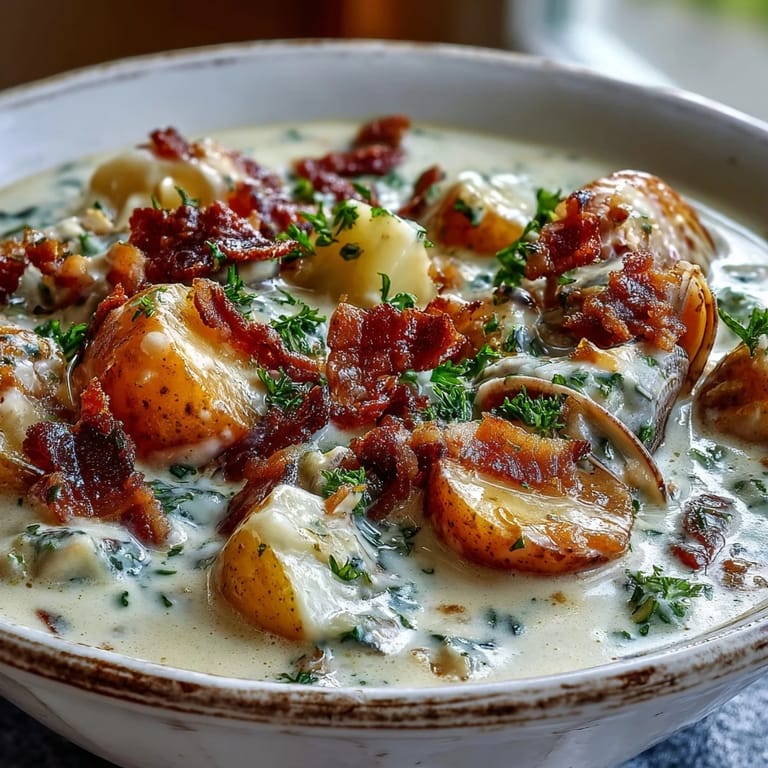
Save This chowder connects us to generations of coastal cooks who transformed humble ingredients into something extraordinary. Each time you make it, you join that lineage of caretakers preserving not just a recipe, but a moment in American culinary history.
Recipe FAQs
- → What's the difference between New England and Manhattan clam chowder?
New England chowder features a creamy, milk-based broth with potatoes, while Manhattan uses tomatoes and has a much lighter, clearer consistency. The creamy version is the traditional preparation found throughout coastal New England restaurants and homes.
- → Can I use canned clams instead of fresh?
Absolutely. Canned chopped clams work wonderfully and actually save significant preparation time. Use the juice from the cans as part of your liquid measure for maximum flavor. Fresh clams provide slightly better texture, but canned clams yield excellent results.
- → How do I prevent the dairy from curdling?
Avoid boiling once the cream and milk are added—maintain a gentle simmer instead. Adding dairy slowly while whisking helps temper it, and using room temperature liquids rather than cold from the refrigerator also prevents separation. The flour roux also helps stabilize the broth.
- → Can I make this chowder ahead of time?
The flavors actually improve after resting overnight. Prepare completely, cool, and refrigerate. Reheat gently over low heat, stirring occasionally. You may need to add a splash more milk or cream since it will thicken further in the refrigerator.
- → What can I serve with clam chowder?
Oyster crackers are the traditional accompaniment—their saltiness perfectly complements the creamy broth. Crusty bread, warm rolls, or buttery crackers also work beautifully. Many New Englanders enjoy a glass of crisp white wine like Sauvignon Blanc alongside.
- → How should I store leftovers?
Cool completely and transfer to an airtight container. Refrigerate for up to 3 days. The chowder will thicken considerably—thin with additional milk or cream when reheating. Freezing is not recommended as the dairy can separate and the potatoes may become grainy.