 Save
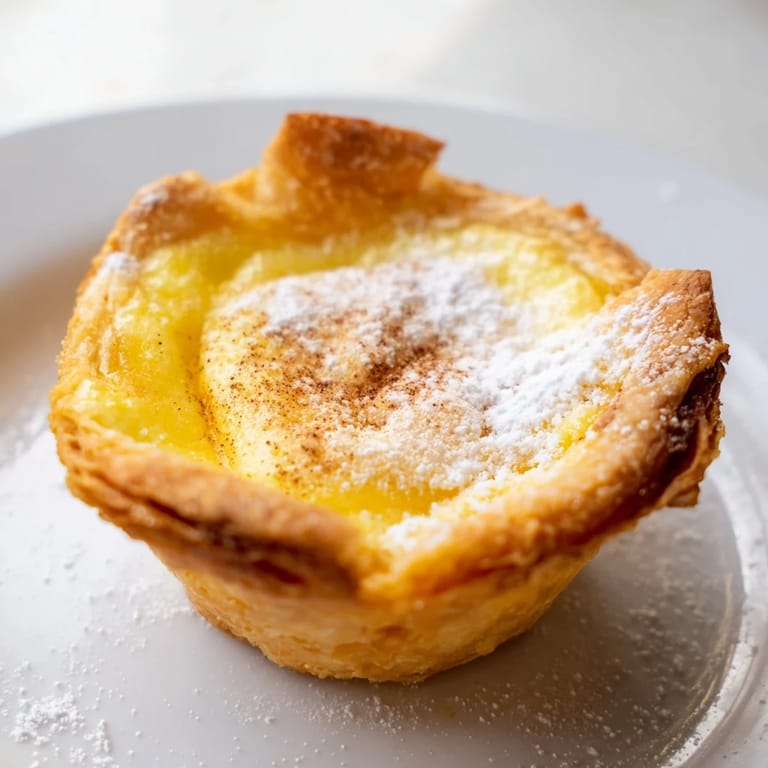
Save There's a particular afternoon I can't quite forget—sitting in a small café in Lisbon, my pastry fork barely touching the plate because I was too mesmerized by the way the phyllo shattered between my teeth, releasing this whisper-soft custard infused with cinnamon. The baker told me these tarts were nothing fancy, just honest pastry work, but I knew I had to learn. Now when I make them at home, that same magic happens in my own kitchen, and suddenly I'm transported back to that sunlit corner table.
I brought a batch of these to a dinner party once, nervous because homemade pastry can be temperamental, but the moment people bit into them, the whole room went quiet in that specific way that only happens when food is genuinely delicious. My friend Sarah asked for the recipe before dessert was even finished, and I realized this was one of those dishes that somehow feels both elegant and completely approachable.
Ingredients
- Phyllo pastry (12 sheets): The paper-thin foundation that transforms into golden, shattered delicacy when brushed with butter and crisped—buy it fresh or thawed, never frozen mid-package.
- Unsalted butter (60 g melted): The real star that makes phyllo sing, so use real butter, not a substitute, and brush generously but not so much that it pools.
- Whole milk (250 ml): The base of our custard, providing body without richness, and the cornstarch will thicken it into something almost velvet-like.
- Cornstarch (2 tbsp): This thickens the custard to that perfect pourable consistency—whisk it with cold milk first or you'll end up with lumps that even the gentlest whisking can't fix.
- Heavy cream (125 ml): Just enough richness to make the custard feel luxurious without overwhelming the delicate vanilla and cinnamon.
- Granulated sugar (100 g): Sweetens the filling to balance the spice, and it also helps the egg yolks emulsify when you whisk them together.
- Egg yolks (4 large): The custard's backbone—always use room-temperature eggs so the yolks blend smoothly into the milk mixture without scrambling.
- Vanilla extract (1 tsp pure): Pure vanilla is non-negotiable here because the artificial stuff will taste thin and slightly off against the cinnamon.
- Ground cinnamon (½ tsp for filling, 1 tsp for topping): The spice that defines this tart, warming and slightly mysterious—use freshly ground if you can.
- Salt (pinch): A tiny amount that somehow makes every other flavor sing without announcing itself.
- Powdered sugar (2 tbsp): The final whisper of sweetness that catches the light when dusted over warm tarts.
Tired of Takeout? 🥡
Get 10 meals you can make faster than delivery arrives. Seriously.
One email. No spam. Unsubscribe anytime.
Instructions
- Prepare your oven and phyllo:
- Heat your oven to 200°C (400°F) while you work with the phyllo—it dries out quickly, so keep the stack covered with a barely damp towel. Take one sheet, brush it lightly but thoroughly with melted butter, then lay another sheet on top and repeat until you have three buttered layers stacked together.
- Cut and mold the pastry cups:
- Using a sharp knife or pizza cutter, cut your three-layer stack into squares large enough to drape into your muffin cups without tearing. Gently press each phyllo square into a muffin cup, letting the corners fold naturally—they don't need to be perfect because the imperfections actually make them more charming.
- Blind bake the shells:
- Bake these phyllo cups for 8–10 minutes until they're lightly golden and feel papery-crisp to the touch. This initial bake ensures they stay crispy when the custard goes in, a lesson I learned the hard way with soggy tarts.
- Make the custard base:
- While the phyllo bakes, pour your milk into a medium saucepan and whisk in the cornstarch until you see no lumps—this prevents clumping later. Add the heavy cream, sugar, egg yolks, vanilla, cinnamon, and salt, whisking everything until it looks like a pale, smooth batter.
- Cook the custard slowly:
- Set the saucepan over medium heat and keep whisking constantly—this is crucial because the eggs will scramble if the heat is too high or if you stop whisking. After about 5–7 minutes, you'll feel the custard thicken noticeably, and it should coat the back of a spoon without dripping off immediately; that's your signal to remove it from heat.
- Fill the tarts:
- Let the custard cool for just a minute or two (still warm enough to pour), then carefully divide it among the pre-baked phyllo cups, filling them almost to the top. They should look generous but not overflowing.
- Final bake until set:
- Return the filled tarts to the oven for another 8–10 minutes, watching for the moment when the custard surface loses its shine and looks just barely set. You want them still slightly jiggly in the very center—they'll continue to set as they cool.
- Finish with spice and sugar:
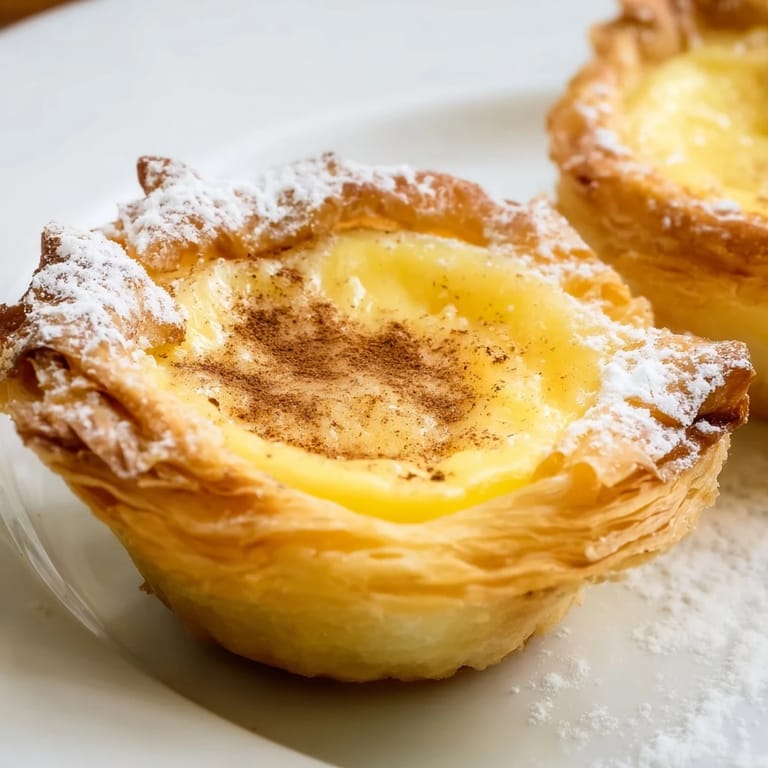
- Once cool enough to handle (about 5 minutes), dust each tart with a tiny pinch of ground cinnamon and a light shower of powdered sugar. The contrast between the warm tart and the cool sugar is part of the magic.
 Save
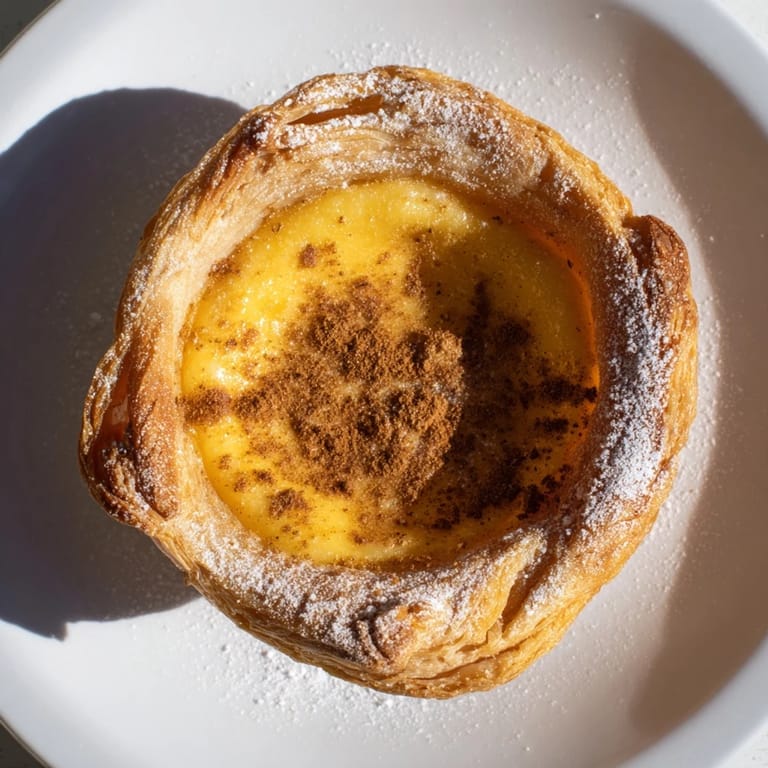
Save There's something almost ceremonial about the moment you dust these with powdered sugar, when the tart goes from looking like something rustic to something you'd see in a Portuguese bakery window. My daughter insists they taste like a special occasion in pastry form, which is exactly right.
The Phyllo Technique That Changed Everything
Once I started buying phyllo that was properly thawed (and keeping it covered while I worked), everything improved—the sheets didn't tear, the layers puffed more evenly, and the final texture was actually shatteringly crisp. The difference between struggling with brittle sheets and working with supple ones was night and day, and I wish someone had emphasized this simple detail earlier. Temperature matters with phyllo in a way it doesn't with other pastries.
Serving and Storage Wisdom
These tarts are best served slightly warm, when the custard is still soft enough to spoon into and the pastry still remembers it was crispy. If you need to make them ahead, store them covered in the refrigerator and give them a quick 5-minute reheat in a 180°C oven—not a microwave, which will turn the phyllo rubbery. They keep for about three days if you can resist eating them all in one sitting.
Pairing and Occasions
I've learned that these tarts pair beautifully with afternoon coffee or as a finale to a light dinner, and they're somehow elegant enough for guests but simple enough that you don't feel stressed making them. The Portuguese traditionally serve them with a small glass of chilled white port or a tiny espresso, which feels like the perfect way to acknowledge that you've made something a little special.
- A squeeze of fresh lemon zest stirred into the custard before cooking adds brightness that echoes the Portuguese seaside.
- If phyllo feels intimidating, remember that slightly imperfect tarts taste exactly the same as perfect ones.
- These freeze beautifully for up to a month—bake them, cool completely, then wrap individually before freezing.
 Save
Save These Portuguese egg tarts are proof that some of the most memorable food is simple—phyllo, custard, cinnamon—transformed into something that feels far more complicated than it actually is. Once you make them once, you'll find yourself making them again and again.
Recipe FAQs
- → What type of pastry is used for the cups?
Phyllo pastry sheets are layered and molded into cup shapes, then baked until crisp and golden.
- → How is the custard filling thickened?
The custard is thickened using cornstarch while gently cooking the milk, cream, egg yolks, sugar, and spices.
- → Can these be prepared ahead of time?
Yes, the phyllo cups can be baked in advance and filled just before serving for optimal crispness.
- → What flavorings enhance the custard?
Ground cinnamon and pure vanilla extract give the custard a warm, aromatic flavor.
- → How should leftovers be stored and reheated?
Store chilled and reheat briefly in an oven to restore the crisp texture of the phyllo cups.