 Save
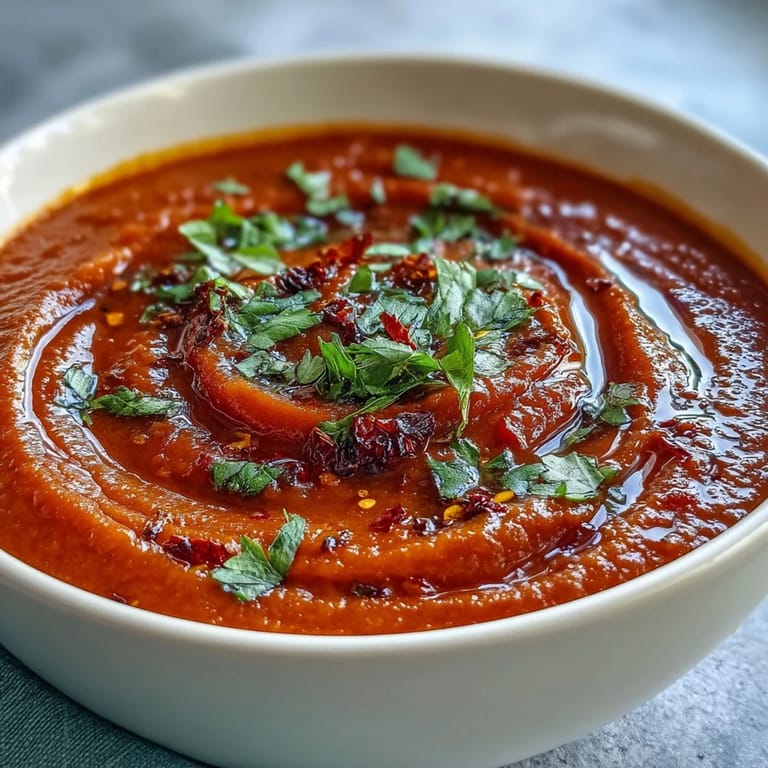
Save The first time I made roasted red pepper soup, my kitchen filled with an aroma that transported me straight to a Mediterranean hillside. It was a brisk autumn evening when I discovered this recipe, scribbled on a torn page from my grandmother's collection. The vibrant color caught me off guard—like liquid sunset in a bowl. My hands smelled of roasted garlic for hours afterward, but I didn't mind one bit.
Last winter, when my neighbor was recovering from surgery, I brought over a thermos of this soup with some crusty bread. She called me that evening, voice warm with gratitude, asking what magic I had worked into such a simple dish. Standing in my dark kitchen with the phone pressed to my ear, I felt that peculiar joy that comes from feeding someone exactly what they needed.
Ingredients
- Red Bell Peppers: Look for peppers with tight, glossy skin and substantial weight for their size—those are the juiciest ones with the most flavor.
- Harissa Paste: This North African chili paste adds complexity rather than just heat—I once left it out and the soup tasted like it was missing its soul.
- Potato: A humble addition that creates incredible body and silkiness without adding cream, something I discovered during a late-night kitchen experiment.
- Garlic: Roasting a whole head transforms its pungency into sweet, mellow notes that form the backbone of this soup.
Tired of Takeout? 🥡
Get 10 meals you can make faster than delivery arrives. Seriously.
One email. No spam. Unsubscribe anytime.
Instructions
- Roast the stars of the show:
- Preheat your oven to 425°F and prepare the peppers by halving and deseeding them, placing them cut-side down on a parchment-lined baking sheet. The garlic needs a bit more care—slice off the top, drizzle with olive oil, and wrap in foil before adding it to the same baking sheet.
- Char and transform:
- Roast for about 25-30 minutes until those pepper skins blister and blacken. The kitchen will fill with a sweet, smoky perfume that signals youre on the right track.
- Prep while you wait:
- As your peppers roast, dice the onion, carrot, and potato into similar-sized pieces so they cook evenly. I find theres something meditative about knife work while something else is cooking.
- Build your flavor base:
- Heat olive oil in a large pot and sauté those diced vegetables until theyre soft and the onions turn translucent. This is where patience pays off—dont rush this foundational step.
- Add the power players:
- Stir in tomato paste and harissa, letting them sizzle briefly to wake up their flavors. The aroma will shift immediately, becoming deeper and more complex.
- Bring everything together:
- Add your roasted peppers, squeeze in that buttery soft garlic, sprinkle in smoked paprika, and pour in the broth. Let everything simmer until the vegetables surrender completely to the heat.
- The transformation:
- Blend until silky smooth—I prefer using an immersion blender right in the pot to avoid transferring hot liquid. Watch as the separate ingredients become one cohesive, vibrant creation.
- Final touches:
- Season carefully with salt and pepper, tasting as you go. The soup should taste bold but balanced, with no single flavor dominating.
 Save
Save On a snow-laden evening last January, my friend Elise dropped by unexpectedly just as I was blending this soup. The windows had steamed over from the cooking, creating a cozy barrier between us and the winter outside. We sat at the kitchen counter, dipping bread into our bowls, barely speaking—just sighing contentedly between spoonfuls. Sometimes the best conversations happen without words.
Making It Ahead
This soup actually improves with time, as the flavors meld and deepen overnight in the refrigerator. I often make it on Sunday afternoons, portioning it into containers that line my fridge like bright orange promises of comfort for the week ahead. The color stays vivid for days, unlike some soups that dull and fade.
Heat Level Customization
Harissa varies dramatically between brands, something I discovered after accidentally turning a batch of this soup into something that could strip paint. Start with half the amount if youre using a new brand, then taste and add more gradually. I keep a small notebook in my kitchen drawer with notes on different brands and their heat levels—a practice that has saved many meals.
Serving Suggestions
While this soup is substantial enough to stand alone, it plays beautifully with accompaniments that add texture and contrast. I learned this from a Moroccan friend who insists soup should always offer a journey of sensations, not just flavors.
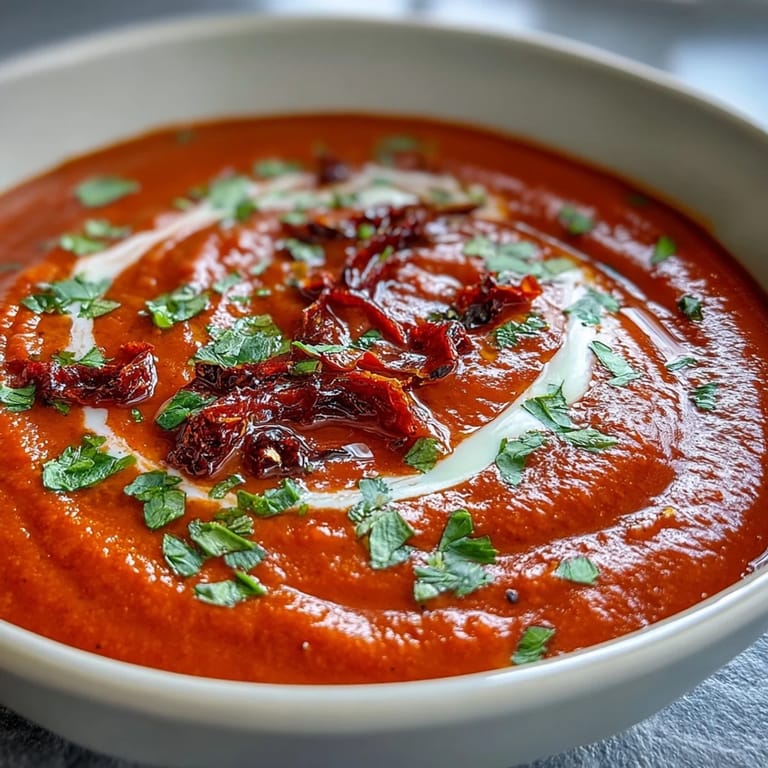
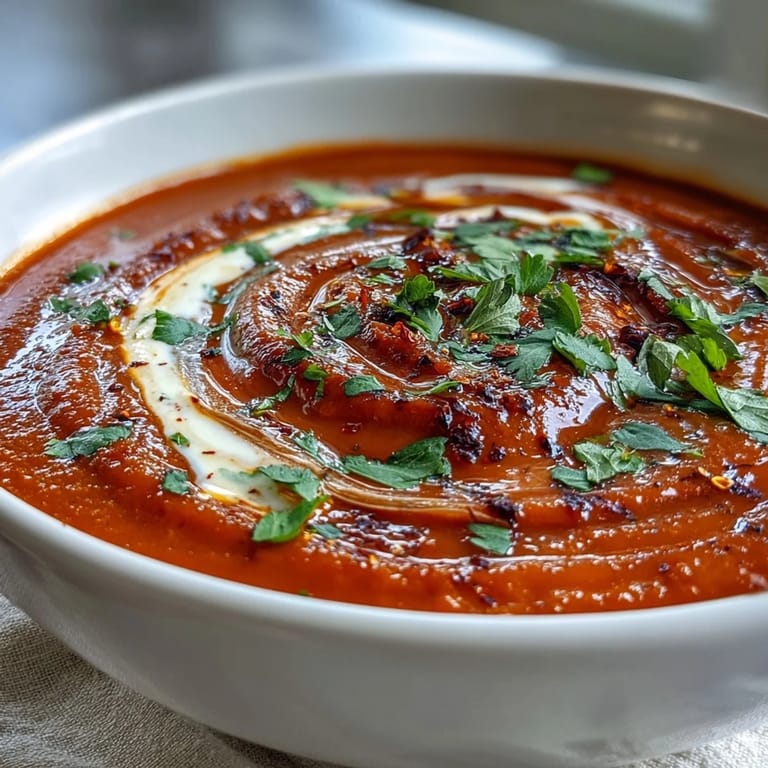
- A dollop of tangy Greek yogurt creates beautiful marbled patterns and cuts through the richness with its acidity.
- Toasted pine nuts or pumpkin seeds scattered on top add a delightful crunch that makes each spoonful more interesting.
- For a complete meal, serve alongside a simple green salad dressed with lemon and good olive oil to cleanse the palate between spoonfuls.
 Save
Save This roasted red pepper soup has taught me that the most vibrant flavors often come from the simplest ingredients given time and proper treatment. May your kitchen fill with the same sweet, smoky aroma that has become one of my favorite cooking memories.
Recipe FAQs
- → Can I make this soup ahead of time?
Absolutely. This soup actually improves after resting overnight, allowing flavors to meld and deepen. Store in an airtight container in the refrigerator for up to 4 days. Reheat gently over low heat, adding a splash of broth if needed to adjust consistency.
- → How spicy is the harissa in this soup?
The harissa provides a gentle, warming kick rather than overwhelming heat. Start with 1½ teaspoons and taste after blending—you can always add more. Harissa's complex flavor profile includes roasted peppers, spices, and sometimes rose petals, adding layers beyond simple spiciness.
- → What can I use instead of a blender?
An immersion blender works perfectly for this soup, allowing you to puree directly in the pot. If you only have a standard blender, work in batches and be cautious with hot liquids—remove the center cap of the blender lid and cover with a kitchen towel to allow steam to escape safely.
- → Can I freeze this soup?
Yes, this soup freezes beautifully. Cool completely before transferring to freezer-safe containers, leaving room for expansion. It will keep for up to 3 months. Thaw overnight in the refrigerator and reheat slowly, stirring occasionally. The texture may seem slightly thinner after freezing but will come together well.
- → Is roasting the peppers necessary?
Roasting is essential for achieving the deep, sweet flavor and silky texture that makes this soup exceptional. Raw peppers would result in a fresh, acidic taste. The high heat caramelizes natural sugars and chars the skins, which you peel away to leave behind tender, smoky flesh. Don't skip this step—it's the foundation of the soup's character.
- → Can I use jarred roasted peppers?
While jarred roasted red peppers work in a pinch, they lack the fresh, intense flavor achieved by roasting your own. Jarred peppers often sit in brine or oil, which can dilute their taste. If you must use them, drain thoroughly and pat dry before adding. For the best results, take the time to roast fresh peppers—the difference is remarkable.