 Save
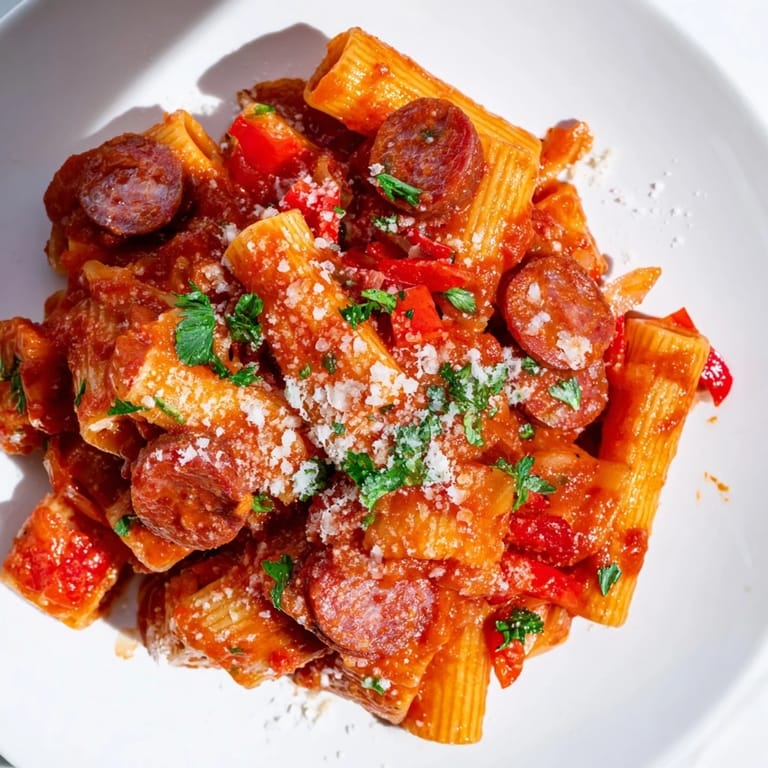
Save There's something about the smell of chorizo hitting hot oil that instantly transports me to a small kitchen in Barcelona, even though I was cooking in my own apartment. My neighbor had just returned from Spain with a package of proper Spanish chorizo, and instead of saving it for something fancy, I threw together this pasta one random Tuesday night. The way the oil turned crimson as the chorizo released its smokiness felt like a small act of magic, and I was completely hooked from that first taste.
I made this for my partner on a night when he'd had a rough day, and watching his face when he took the first bite was worth every minute. He asked for seconds immediately, then thirds, and by the end I realized I'd barely eaten anything because I was too busy watching him enjoy it. That's when I knew this recipe had staying power—it's not just food, it's the kind of dish that quietly makes people happy.
Ingredients
- Penne or rigatoni, 350 g (12 oz): The tube shapes trap the chorizo oil and tomato sauce beautifully, so don't swap for thin pasta.
- Spanish chorizo, 200 g (7 oz), sliced into thin rounds: This is non-negotiable—seek out the real Spanish kind with smoked paprika already built in, not the fresh Mexican variety.
- Medium onion, finely chopped: Finely chopped means it melts into the sauce rather than staying chunky.
- Garlic cloves, 2, minced: Garlic burns if you're not careful, so wait until everything else is soft before adding it.
- Red bell pepper, diced: I prefer red because it's sweeter and adds a natural brightness that complements the smokiness.
- Canned chopped tomatoes, 400 g (14 oz): Don't use tomato sauce—you need the texture and acidity of real tomatoes.
- Smoked paprika, 1 tsp: This is your secret weapon; it echoes what's already in the chorizo and deepens everything.
- Chili flakes, ½ tsp (optional): I use them when I'm in the mood for heat, but the dish is perfect without.
- Freshly ground black pepper: Add this at the end so it doesn't lose its bite during cooking.
- Extra virgin olive oil, 2 tbsp: Good oil matters here because it carries all the chorizo flavor.
- Fresh parsley, chopped, for garnish: Parsley is your final brightener—don't skip it.
- Manchego or Parmesan cheese, grated, for serving: Manchego is Spanish and pairs beautifully, but Parmesan works too.
Tired of Takeout? 🥡
Get 10 meals you can make faster than delivery arrives. Seriously.
One email. No spam. Unsubscribe anytime.
Instructions
- Start your pasta water:
- Bring a large pot of salted water to a boil—use enough salt that it tastes like the sea. Get this going first so everything else can happen while the pasta cooks.
- Cook the pasta:
- Add the pasta and cook according to package instructions until al dente, which means it has a slight firmness when you bite it. Before draining, reserve ½ cup of starchy pasta water—this is liquid gold for loosening your sauce later.
- Brown the chorizo:
- While the pasta cooks, heat your olive oil in a large skillet over medium heat and add the sliced chorizo. Listen for a gentle sizzle and watch as the oil around each slice turns deep red from the paprika and fat. After 2–3 minutes, you'll see the edges brown slightly—that's your signal to move forward.
- Soften the vegetables:
- Toss in your chopped onion and diced red pepper, stirring occasionally. You want them to become soft and translucent, about 4–5 minutes, which creates a sweet base for everything else.
- Bloom the spices:
- Add your minced garlic, smoked paprika, and chili flakes if using, and stir constantly for about 1 minute. You'll smell it transform from raw to toasty—that's exactly what you're looking for.
- Simmer the tomatoes:
- Pour in the canned tomatoes with all their juice and let everything bubble gently for 8–10 minutes. The sauce will thicken slightly and the flavors will meld together beautifully.
- Combine everything:
- Add your drained pasta to the skillet and toss everything together until the pasta is coated. If the sauce feels too thick, add your reserved pasta water a splash at a time until it flows naturally around the pasta.
- Finish and serve:
- Taste and adjust seasoning with black pepper, then remove from heat. Divide into bowls and top generously with fresh parsley and cheese if you like the extra richness.
 Save
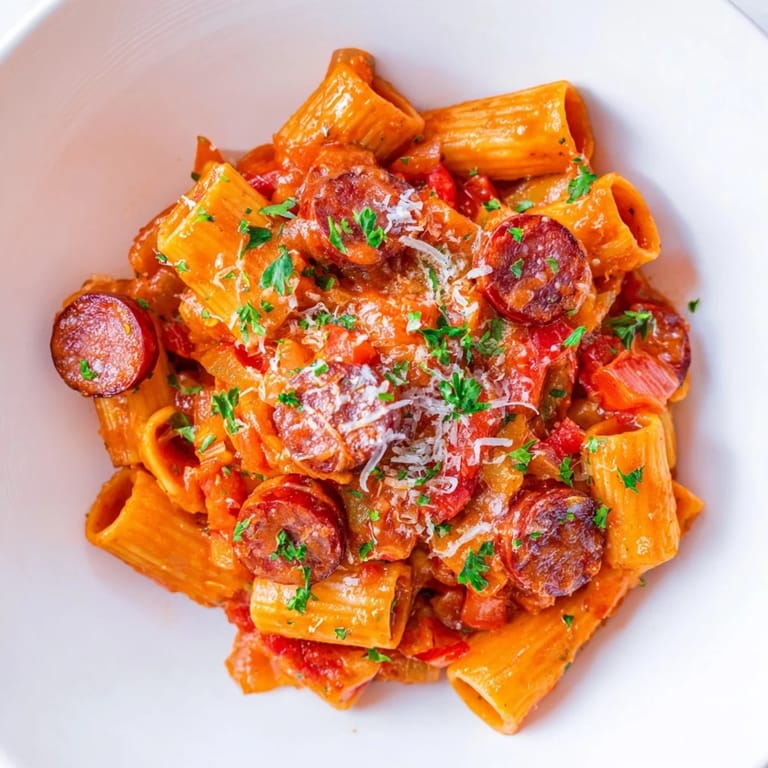
Save I've made this dish dozens of times now, and it never fails to feel like a small celebration. There's something about Spanish flavors that makes even a simple weeknight pasta feel like you've taken a trip somewhere exciting, and that's the real magic of this recipe.
The Chorizo Choice
The first time I made this, I grabbed whatever chorizo was on sale, and the result was greasy and overwhelming. Then I learned the difference: Spanish chorizo is already cured and smoked, so it just needs to warm through and release its oils, while other types might require different cooking. Seek out chorizo labeled as Spanish or Ibérico if your store carries it—the flavor is so much more complex and worth the hunt. The paprika and garlic are already doing the heavy lifting in the spice profile, so you're not relying on the pasta to do extra work.
Building Layers of Flavor
What surprised me most when I started really paying attention to cooking was how much difference the order of ingredients makes. By adding garlic and paprika after the onions soften, instead of at the beginning, you avoid bitter flavors creeping in. The tomatoes then have time to absorb all that smoky, garlicky foundation, creating a sauce that tastes intentional rather than jumbled. This is the kind of small detail that separates a good dish from one people actually ask you to make again.
Variations That Work
Once you understand how this dish works, you can play with it confidently. A splash of dry white wine added after the vegetables soften brings sophistication, or try stirring in a handful of baby spinach right at the end for color and nutrition. Some nights I add roasted red peppers from a jar for extra sweetness, and once I even threw in some olives because I had them and thought why not—it worked beautifully. The beauty of this recipe is that it's forgiving enough to welcome creativity, but strong enough in its core flavors that simple additions only make it better.
- A pinch of smoked sea salt at the end elevates the entire dish if you have it.
- Finishing pasta water is your secret tool for silky, restaurant-quality results.
- Don't skip the parsley—it's the final brightness that makes everything sing.
 Save
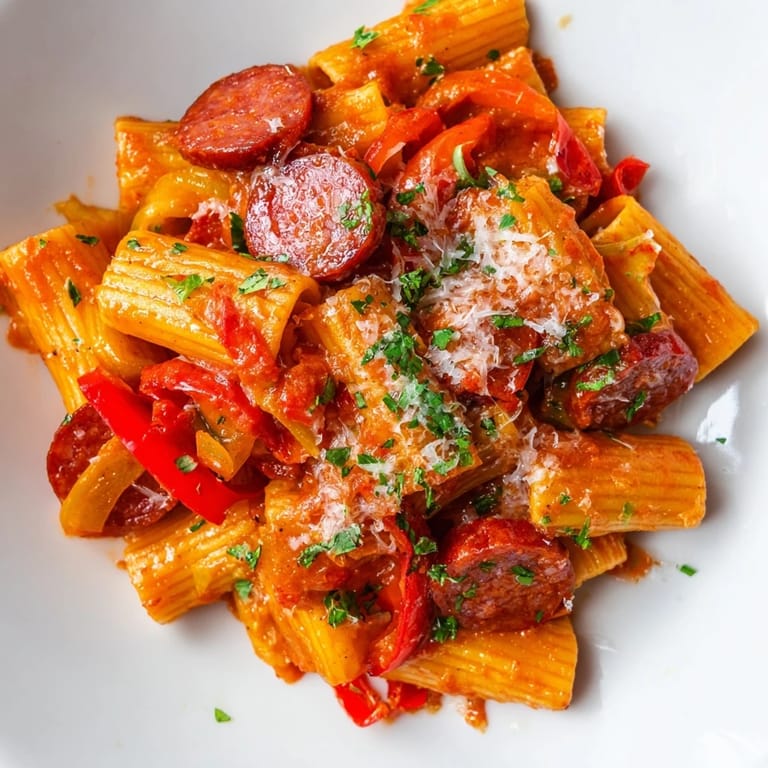
Save This is the kind of recipe that feels like a friend sharing a secret with you—simple, honest, and absolutely worth making again. Every time you cook it, it'll remind you why Spanish flavors have that magnetic pull.
Recipe FAQs
- → Can I use a different pasta type?
Yes, penne or rigatoni are recommended for holding the sauce well, but other short pasta like fusilli or farfalle work too.
- → What can I substitute for Spanish chorizo?
Spicy Italian sausage is a good alternative if Spanish chorizo is unavailable, providing a similar smoky and savory flavor.
- → Is the dish spicy?
The heat level can be adjusted by adding or omitting chili flakes according to your preference.
- → How can I add extra greens to the dish?
Stir in baby spinach or arugula towards the end of cooking for added color and nutrition.
- → Can I enhance the sauce flavor?
A splash of dry white wine after sautéing vegetables enhances depth and complexity.